
Introduction
When encountering various steel pipe types with different lengths and thicknesses, people often get confused by pipe schedules. There are numerous pipe schedules, for example, Schedule 5, 10, 20, 40, 60, 80, and more. The lower the schedule number, the thinner the pipe wall; as the schedule number increases, the wall becomes thicker.
A pipe schedule specifies the pipe’s wall thickness, thereby indicating its strength and internal pressure rating.
In this article, let’s explore what Schedule 10 pipe is and become familiar with its characteristics and specifications, applications, advantages, limitations, and more.
What is Schedule 10 Pipe?
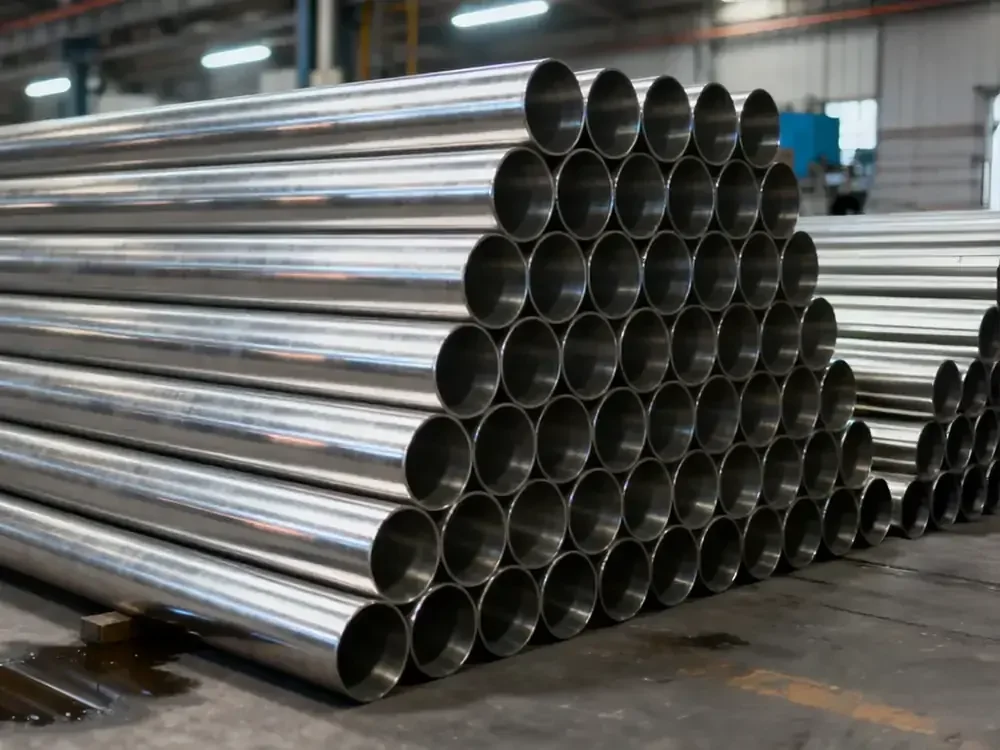
Schedule 10 pipe refers to the thin-walled pipe category used for low-pressure fluid handling of non-hazardous fluids across various industries.
The wall thickness varies across these pipes as the nominal diameter changes. Because they usually have lighter walls than other pipe schedules, such as schedule 40, 60, and 80, they can reduce pressure loss when transporting fluid from one point to another. Additionally, these pipes are easy to bend, so they don’t require extra fittings.
Schedule 10 can also be represented as SCH 10. The terminology “Schedule” is a standardized dimensionless term. It is defined by the American National Standards Institute (ANSI) and corresponds to the pipe’s strength.
Key Characteristics and Specifications
Regarding their characteristics, their thin walls make these pipes lightweight and flexible. The light-walled design makes installation and handling easy. However, they must not be used at temperatures above 250 °C. Schedule 10 pipes have a smoother inner surface, which minimizes pressure loss and allows fluids to flow without hindrance.
Typically, they are usually made of stainless steel (304 or 316), an iron-chromium alloy. This means they are corrosion-resistant and work well for industrial use in oxidative and corrosive environments. The composition of these pipes may vary depending on the application and pipe grade used. However, carbon steel variations are also available.
When discussing wall thickness – one of the most important specifications– it varies as the nominal pipe size (NPS/DN) changes. It is not just an exact value for schedule 10 pipes, but a series of wall thicknesses. The nominal diameters found in these pipes range from ⅛” to 36”. The varied wall thicknesses of some schedule 10 stainless steel pipes are as follows:
| Nominal pipe size (NPS) | Outer diameter (in) | Wall thickness (in) |
| 1/8 | 0.410 | 0.049 |
| 1 | 1.315 | 0.109 |
| 8 | 8.625 | 0.148 |
They follow ASME B36.10M (Carbon Steel) and ASME B36.19M (Stainless Steel) standards. To ensure you select the right pipe size, check the schedule 10 chart for dimensions for compatible fittings.
Applications and Uses
Schedule 10 pipes, as discussed previously, are primarily used for low-pressure applications with non-hazardous fluids due to their thin-walled design. They are used in various industries, including petroleum, chemical, food processing, and marine. Schedule 10 pipes can be used for applications including:
- Railings
- Transport of industrial fluids/gas
- Drainage and water treatment
- Construction and HVAC systems
- Fire protection
Advantages and Limitations

Although in the thin-wall pipe category, schedule 10 pipes offer several advantages. However, they have some limitations. The following are some of the advantages discussed:
Advantages:
- Cost-effective: Thin walls mean less material use, which is why they are low-cost and suitable for low-pressure applications.
- Corrosion resistance: The stainless steel composition (304 and 316) of schedule 10 pipes provides excellent corrosion resistance. They perform best in corrosive and oxidative environments.
-
- Lightweight: Because the walls are very thin, the pipes are lightweight and easy to install, transport, and handle.
- Aesthetic appeal: Stainless steel pipes are widely known for their aesthetic appeal. Schedule 10 stainless steel alloy pipes have a smooth, polished finish. They can be used in settings where aesthetic appeal is important.
- Improved flow capacity: The smooth inner surface supports fluid transport fast, minimizing pressure losses.
Limitations:
- Low-pressure rating: These pipes have a relatively low pressure rating, lower than that of other schedule pipes.
- Lower Structural Strength: Thinner walls reduce structural integrity. As a result, they bend easily and are not suitable for demanding structural applications.
- Temperature Limitations: Carbon steel Sch 10 pipes cannot be used above 400–425 °C, while some alloy steel variants may be used for higher-temperature applications.
Schedule 10 vs. Other Schedules
As we move to a higher schedule number, the thickness increases. So, schedule numbers 20, 40, 60, 80, and so on are pipe categories with thicker walls and are used for various other demanding applications. They can handle pressure well and are resistant to high temperatures. Additionally, their impact and mechanical resistance are higher than those of Sch 10 pipes. It’s always a good idea to check the pipe dimensions and wall thicknesses before you select one for your project.
Conclusion
Schedule 10, or Sch 10 pipes, belong to a thin-walled pipe category that is lightweight, flexible, and offers great aesthetic appeal. They are corrosion-resistant and best for low-pressure applications. When selecting Sch 10 pipes, you must verify dimensions and pressure ratings to ensure they meet the requirements of the specific application. Although well-suited to various industrial applications, they may not be suitable for all use cases. Other higher schedules are thick-walled and can withstand higher pressures. So, select carefully.