
Selecting stainless steel pipes is a critical decision. The wrong materials can cause issues such as premature corrosion, leaks, excessive maintenance costs, and unexpected downtime. The right materials can improve equipment reliability, extend service life, and reduce total operating costs.
Many buyers focus only on the pipe size and price. Critical selection depends on many other factors, such as grade, operating pressure, service temperature, transported fluid, fabrication methods, and surface finish.
In this article, we have discussed various tips to help you choose the right materials. Let’s know!
Why Does Right Stainless Steel Pipe Selection Matter
Stainless Steel materials operate continuously under demanding conditions and require the correct durability and compatibility. Therefore, it is essential to choose the right stainless steel pipes.
Here are a few more objectives of stainless steel materials.
- Improve corrosion resistance
- Increase equipment lifespan
- Reduce maintenance costs
- Maintain product purity
- Enhance process safety
- Minimize downtime
- Meet industry standards
- Lower lifecycle costs
Tip #1: Choose the Right Pipe Grade
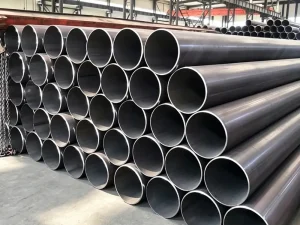
Stainless Steel material has different grades and options. Each grade contains a different amount of chromium, nickel, molybdenum, titanium, and carbon. Here are three main grades to choose from:
304 Stainless Steel
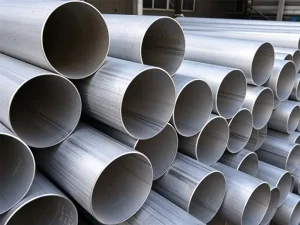
The 304 stainless steel grade is known for its corrosion resistance, high temperature resistance, and good weldability. Therefore, it is suitable for:
- Food processing
- Water pipelines
- Building services
- Dairy equipment
- Beverage production
- General industrial piping
316 Stainless Steel
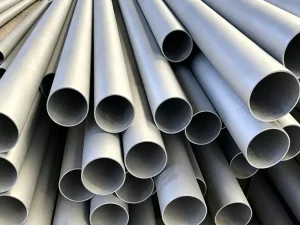
316 stainless steel also has compatible features like 304, but it is suitable for highly corrosive environmental conditions, such as:
- Chemical plants
- Marine systems
- Pharmaceutical facilities
- Coastal installations
- Desalination plants
- Offshore equipment
321 Stainless Steel
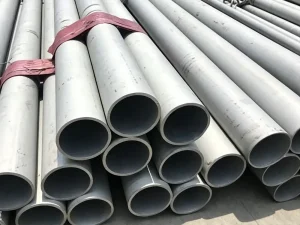
321 stainless steel is preferred for high-temperature conditions due to its titanium composition and features. The common applications are:
- Exhaust systems
- Heat exchangers
- Boilers
- Furnaces
- Thermal processing plants
| Grade | Corrosion Resistance | High Temperature | Weldability | Typical Industry |
| 304 | Excellent | Good | Excellent | Food, water, construction |
| 316 | Outstanding | Very Good | Excellent | Chemical, marine, pharmaceutical |
| 321 | Good | Excellent | Excellent | Heat processing, power generation |
Tip #2: Evaluate Pressure Conditions
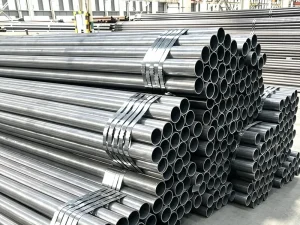
You must choose the right pressure for the given conditions. Selecting a pipe with insufficient pressure compatibility can cause damage and deformation.
Pressure capacity depends on several variables, such as:
- Pipe schedule
- Wall thickness
- Pipe diameter
- Material strength
- Operating temperature
- Manufacturing standard
Pipes can be low-pressure or high-pressure.
Low Pressure
Low pressure systems are suitable for:
- Water distribution
- Drainage
- Ventilation
- Low-pressure process lines
Medium Pressure
Medium pressure systems are ideal for:
- Manufacturing plants
- Food processing
- HVAC systems
- Industrial utilities
High Pressure Systems
Choose high-pressure systems in:
- Oil and gas
- Petrochemical processing
- Steam systems
- High-pressure chemical transport
Tip #3: Consider Operating Temperatures
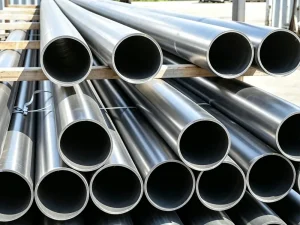
Operating Temperatures can help decide on the right type. When evaluating stainless steel materials, you should consider the following factors:
- Continuous operating temperature
- Peak temperature
- Thermal cycling
- Expansion and contraction
- Heat transfer requirements
Tip #4: Identify the Type of Fluid Being Transported
Which fluid are you going to transport through the pipes? The chemical composition of fluids also matters a lot. Here are a few questions to ask before selecting the right pipe.
- Is the fluid acidic?
- Does it contain chlorides?
- Is it highly alkaline?
- Is it abrasive?
- Does it require ultra-clean piping?
- Is contamination unacceptable?
For example, if the fluid is water, 304 stainless steel is often a sufficient choice.
Tip #5: Consider Welding Requirements
Many industrial piping systems require extensive welding. You should choose those stainless steel grades that have good weldability. The common factors affecting the welding requirements are:
- Carbon content
- Heat input
- Pipe thickness
- Welding process
- Post-weld treatment
Here are a few common welding grades typically available:
- 304
- 304L
- 316
- 316L
- 321
Tip #5: Select the Appropriate Surface Finish
Surface finish also matters a lot as it can affect corrosion resistance, cleanliness, maintenance, and appearance. We have listed a few finish types.
Mill Finish
It is one of the best options for industrial piping and has the following applications.
- Standard factory finish
- Economical
- Suitable for structural applications
Here are a few applications of mill finish.
- Industrial piping
- Utility systems
- Construction
Pickled and Passivated Finish
Pickled and Passivated finish removes the external signs of scaling and provides a quality finish. Here are a few benefits of the pickled and passivated finish.
- Removes welding scale
- Restores corrosion resistance
- Improves surface cleanliness
- Better chemical resistance
A few common industries are using this finish. Examples are:
- Chemical processing
- Oil and gas
- Power plants
Polished Finish
Polished finish is often a necessity for different industrial sectors. This is because of the premium finishes. Here are a few examples of the industrial sectors using polished finish.
- Food processing
- Pharmaceutical manufacturing
- Biotechnology
- Dairy production
Mirror Finish
There comes a mirror finish. It has several applications listed below.
- Medical equipment
- Decorative installations
- Cleanrooms
- High-end food processing
| Finish | Appearance | Corrosion Resistance | Cleanability | Typical Applications |
| Mill Finish | Standard | Good | Moderate | General industrial use |
| Pickled & Passivated | Matte | Excellent | Good | Chemical plants |
| Polished | Smooth | Excellent | Excellent | Food and pharmaceutical |
| Mirror | Reflective | Excellent | Outstanding | Medical and hygienic systems |
Common Mistakes when Choosing the Right Stainless Steel Pipe
When selecting a stainless steel pipe, most people make a few mistakes. Examples of these mistakes are:
- Selecting pipe based only on initial cost
- Ignoring chemical compatibility
- Underestimating operating pressure
- Overlooking temperature limits
- Choosing the wrong pipe schedule
- Neglecting welding considerations
- Using an unsuitable surface finish for hygienic applications
- Failing to verify compliance with industry standards
You should avoid these gross mistakes and ensure the right choice for your stainless steel pipe systems.
Conclusion
Choosing the right stainless steel is not a decision of price or quality. Instead, it is a combination of various factors. The right selection focuses on pipe grade, pressure rating, operating temperature, transported fluid, welding requirements, and surface finish.
If you are looking for the right stainless steel pipes with premium quality and affordability, look no further, as Hunan Yasco Engineering Materials Co., Ltd is here. More than two decades of experience have enabled us to produce quality products. Choose from our products right away!