
Stainless steel pipes are common tools used in different industrial sectors, but different types of the tools have different components and operate under different conditions. However, 304, 316, and 321 stainless steel pipes are the common grades of stainless steel pipes. They have different features and are suitable for different applications.
In this guide, we compare 304, 316, and 321 stainless steel pipes and explain their key uses and applications.
Understanding Different Steel Grades
Stainless steel grades are standardised and have different features and options. However, most stainless steel grades belong to the 300-series of steel, famous for its high corrosion resistance, good weldability, and high toughness.
Let’s know the three main stainless steel grades here.
| Grade | Main Feature | Best For |
| 304 | General-purpose corrosion resistance | Food, water, architecture |
| 316 | Excellent corrosion resistance in chlorides | Marine, chemical, pharmaceutical |
| 321 | High-temperature stability | Exhaust systems, boilers, heat exchangers |
Chemical Composition: 304 vs 316 vs 321 Stainless Steel Pipes
| Element | 304 | 316 | 321 |
| Chromium | 18–20% | 16–18% | 17–19% |
| Nickel | 8–10.5% | 10–14% | 9–12% |
| Molybdenum | — | 2–3% | — |
| Titanium | — | — | ≥5× Carbon |
| Carbon | ≤0.08% | ≤0.08% | ≤0.08% |
Chemical composition depends on the addition of different elements and products.
304 Stainless Steel
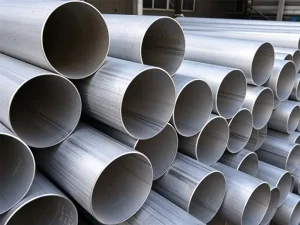
304 stainless steel has 18% chromium and 8% nickel. Because of nickel and chromium, it has the following features:
- Excellent oxidation resistance
- Good corrosion resistance
- High strength
- Easy fabrication
- Good weldability
Because it contains no molybdenum, it has less corrosion resistance to chloride than 316.
316 Stainless Steel
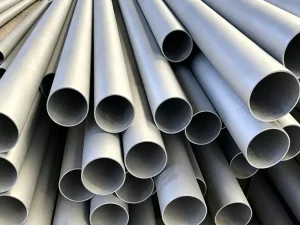
316 stainless steel contains an additional 2-3% molybdenum. Due to its addition, it improves the following features:
- Pitting resistance
- Crevice corrosion resistance
- Chloride resistance
- Saltwater durability
This small addition makes a huge difference in the composition.
321 Stainless Steel
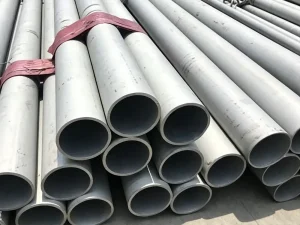
321 is a little different in composition as it comprises titanium instead of molybdenum. The addition of titanium offers the following benefits.
- High-temperature strength
- Weld stability
- Long-term heat resistance
Corrosion Resistance: 304 vs 316 vs 321 Stainless Steel Pipe
Corrosion Resistance varies from one type to another. Let’s know how corrosion resistance is different.
304 Stainless Steel
304 stainless steel offers good resistance in the following environmental conditions.
- Freshwater
- Indoor environments
- Food processing
- Mild chemicals
- Atmospheric exposure
However, if you expose it to chloride for extended periods, it may cause:
- Pitting
- Crevice corrosion
- Surface staining
316 Stainless Steel
Since 316 stainless steel contains molybdenum, it has better corrosion resistance to:
- Saltwater
- Chlorides
- Sulfur compounds
- Industrial chemicals
- Marine atmosphere
Therefore, 316 is a preferred choice for:
- Offshore platforms
- Coastal facilities
- Pharmaceutical plants
- Chemical processing
- Desalination plants
321 Stainless Steel
321 stainless steel offers corrosion resistance despite repeated heatings. It is ideal for the following applications.
- Furnace applications
- Thermal cycling
- High-temperature oxidation
- Welded high-temperature systems
Temperature Resistance: 304 vs 316 vs 321 Stainless Steel Pipe
Temperature resistance varies depending on the type and stainless steel grades.
304 Stainless Steel
304 stainless steel offers good resistance at higher temperatures. It can support a temperature range of 450–850°C without getting affected.
316 Stainless Steel
316 stainless steel has almost the same temperature resistance as 304 stainless steel. However, it offers top-notch corrosion resistance at such a high temperature.
321 Stainless Steel
321 stainless steel is specifically designed for such purposes. It offers excellent resistance to higher temperatures up to 950°C and has the following applications:
- Aircraft exhaust
- Expansion joints
- Boilers
- Power plants
- Heat exchangers
Weldability Comparison: 304 vs 316 vs 321 Stainless Steel Pipe
Welding experience also matters when you have to modify and transform the materials.
304 Stainless Steel
304 stainless steel has excellent weldability with the following features.
- Easy fabrication
- Minimal cracking
- Good availability
316 Stainless Steel
316 stainless steel also features good weldability similar to 304 and delivers excellent performance in aggressive chemical environmental conditions.
321 Stainless Steel
321 stainless steel has higher strength and is suitable for welding at higher temperatures.
Application Differences: 304 vs 316 vs 321 Stainless Steel Pipe
Applications of all these materials vary. Let’s uncover the application differences.
304 Stainless Steel
304 stainless steel is the most commonly used steel for the following applications.
- Food processing
- Beverage production
- Water treatment
- Kitchen equipment
- Construction
- Architectural decoration
- HVAC systems
- General industrial piping
316 Stainless Steel
316 is a suitable material for the following applications.
- Marine engineering
- Offshore platforms
- Chemical plants
- Pharmaceutical manufacturing
- Biotechnology
- Pulp and paper
- Coastal construction
- Medical equipment
321 Stainless Steel
321 Stainless Steel excels in the following applications.
- Aerospace
- Aircraft engines
- Automotive exhaust
- Boilers
- Petrochemical plants
- Refineries
- Thermal processing
- Heat exchangers
- Expansion bellows
| Feature | 304 | 316 | 321 |
| Corrosion Resistance | Excellent | Outstanding | Excellent |
| Chloride Resistance | Moderate | Excellent | Moderate |
| High Temperature | Good | Good | Excellent |
| Weldability | Excellent | Excellent | Excellent |
| Marine Use | Limited | Ideal | Limited |
| Chemical Plants | Good | Excellent | Good |
| Food Industry | Excellent | Excellent | Good |
| High Heat Equipment | Moderate | Good | Excellent |
| Cost | Lowest | Medium | Higher |
Which One is the Best Option?
There is no single steel grade as the best. You have to rely on different options and choose the best grades for different conditions.
For example:
Choose 304 in the following cases:
- General-purpose piping
- Food processing
- Portable water systems
- HVAC
- Indoor applications
- Applications where corrosion conditions are less severe, and cost efficiency is the main demand.
You should choose steel grade 316 in the following conditions.
- Marine environments
- Chemical processing
- Pharmaceutical production
- Applications exposed to chlorides or aggressive chemicals.
Choose steel grade 321 for:
- High temperature handling applications
- Exhaust manifolds
- Furnaces
- Boilers
- Heat exchangers
- Refinery equipment
Conclusion
Choosing between the 304, 316, and 321 grades might be a matter of preference. Here is the summary to know:
- 304 stainless steel pipe is the best choice for excellent all-around performance at an affordable cost.
- 316 stainless steel pipe is the preferred choice for corrosive and chloride-rich environments due to its molybdenum-enhanced resistance.
- 321 stainless steel pipe is specifically engineered for high-temperature service, offering improved stability after welding and prolonged heat exposure.
Are you looking for stainless steel pipes? Don’t worry at all. Hunan Yasco Engineering Materials Co., Ltd is here to help you get premium-quality steel products. We have 20+ years of manufacturing experience and provide seamless steel pipe supply. Contact our experts right away!