
Introduction
Stainless steel tubing is used in nearly all major industries today. It is found in the construction industry, automotive systems, aircraft, factories, chemical plants, food processing plants, and in the medical field. There are many reasons it gained popularity, like:
- Excellent combination of qualities
- Strength
- Corrosion resistance
- Long life
- Modern appearance
Manufacturers focus on properties that have made stainless steel tubing one of the most stable materials for structural and fluid-handling applications. This paper includes all the details you must know about stainless steel tubing. You shall be aware of what it is and of the manufacturing procedure. The grades and sizes available, its type, and the many industries that use it.
Understanding Stainless Steel Tubing
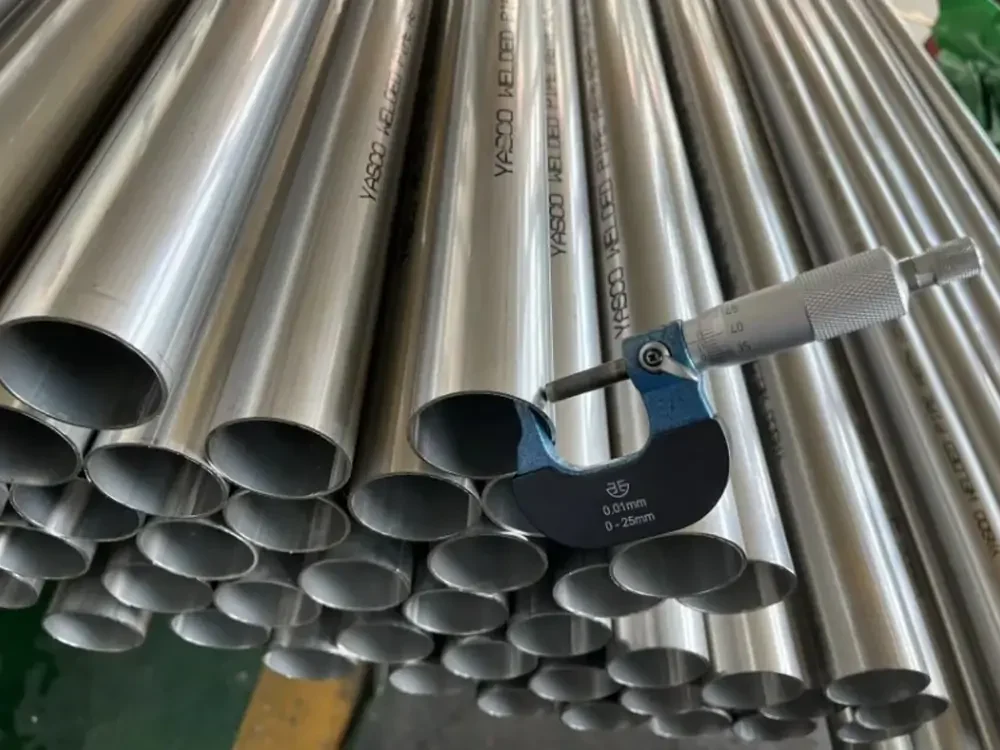
The manufacturer produced stainless steel tubing, specifically hollow stainless steel tubing. The metal should contain at least 10.5% chromium by mass to be classified as stainless steel. This chromium deposits a thin, invisible oxide layer. The user prefers stainless steel tubing because its surface seals itself when scratched, which is why stainless steel is so resistant to rust. This means that the chromium oxide coating on the stainless steel tubing makes it a perfect choice for use at locations where it is exposed to water or chemicals.
These chromium oxide-dispersed users can use stainless steel tubing.
- Fluid transport
- Structural support
- Machine building
- Sanitary equipment
- High-pressure applications
Each of them employs stainless steel tubing. It is resistant to high and low temperatures and to chemicals. Because of its many advantages, stainless steel tubing has become an essential component across many sectors worldwide.
Common Grades of Stainless Steel Tubing
Stainless steel comes in several grades that offer diverse strengths, corrosion resistance, and heat resistance.
| Grades | Compositions | Properties | Applications |
| Grade 304 | 18% chromium and 8% Nickel | Corrosion resistance
Affordable Non-megnatic |
Kitchen appliances
Construction |
| Garde 316 | 2–3% Molybdenum
16–18% Chromium 10–14% Nickel
|
Chloride resistance | Marine and coastal building |
| Garde 430 | 16–18% Chromium
Low Carbon |
Magnetic | Architectural decoration |
| Garde 410 | Higher Carbon content | High strength
Heat-treatable |
Wear-resistant machine parts |
| Grade 2205 | 22% Chromium
5–6% Nickel 3% Molybdenum |
High toughness | Chemical processing systems |
| 17-4 PH | 3–5% Nickel
Copper additions |
Dimensional stability | Mechanical parts requiring high strength |
1. 300 Series Austenitic Stainless Steels
This is the widest spread family. It consists of corrosion-resistant, highly formable, and non-magnetic grades. Almost 70% of stainless steel tubing is made from this family.
· Grade 304
The stainless steel tube is 18/8 stainless steel. The ratio shows that it has 18% chromium and 8% nickel. It is also balanced in terms of strength, corrosion resistance and cheap.
· Grade 316
The stainless steel is grade 316, which means it contains more molybdenum. It includes 2-3% molybdenum, which improves chloride resistance. It can be used in marine and coastal buildings, chemical applications, and medical machines.
2. Ferritic Stainless Steels (400 Series)
These are magnet and low-carbon steels. These are stainless steel tubes, which are very ductile and cost-effective. They are not as strong as austenitic family grades.
· Grade 430
This grade of stainless steel tubing is a cost-effective solution. This is a standard, low-corrosiveness, low-grade general material.
3. Martensitic Stainless Steels
The 400-series stainless steel magnets are similar to ferritic stainless steel. These tubes are heat-treated during the manufacturing of the martensitic stainless steel.
· Grade 410
This is a good grade with moderate corrosion resistance. It is used on turbine blades, knives and in other areas that demand high wear resistance.
4. Duplex Stainless Steels
They consist of austenitic and ferritic stainless steel. They are twice as strong as the traditional stainless steels. They are very crack- and corrosion-resistant.
· Grade 2205
These are regularly utilized duplex stainless steel tubing. They are applicable in oil and gas plants, chemical plants, offshore equipment, and desalination plants.
5. Precipitation-Hardening (PH) Stainless Steels.
Heat treatment increases the very high strength in these steels.
· 17-4 PH
A good balance of high strength and corrosion resistance characterises 17-4 PH. These tubes have applications in valves, aerospace components, and high-pressure systems.
Stainless Steel Tubing Types
· Seamless Tubing
Smooth tubing does not require any welded seam. It begins as a solid round billet, which is heated and pricked to form a hollow tube. The tube is then rolled and made to the desired size.
Key features
- These tubes do not have a weld line.
- They have a superior pressure operation
- The tubes have a uniform structure
- Very high pressure, high temperature, and critical applications
· Welded Tubing
The stainless steel sheet is rolled, and the edges are welded together. It gives the desired welded tubing. The welds are flattened down to a clean finish. The current welding provides robust, sound tubes.
Key features
- Less expensive than smooth tubing.
- Welded tubing has exquisite size precision.
- They are available in long lengths and numerous sizes.
- Suitable for low to medium-pressure applications.
· Round, Square, and Rectangular Shapes
The stainless steel tubing is available in a few forms:
· Round Tubing
Used for fluid flow, structural support, automotive components, and sanitation.
· Square Tubing
It is used in construction, frames, and architecture. Easy to weld and assemble.
· Rectangular Tubing
These are utilized when strength is required in a flat-sided shape. These include frames, railings, and equipment.
Sizes and Wall Thickness
There is an excellent variety of stainless steel tubing in various sizes. The two key dimensions are:
- Outer Diameter (OD)
- Wall Thickness (WT)
The internal diameter (ID) and wall thickness are interdependent. Usually, OD ranges from 6 mm to 508 mm, and wall thickness ranges from 0.5 mm to 50 mm, depending on the use. The walls of seamless tubes are usually made thicker and smaller in diameter. Tubes can be welded with a large diameter and with finer walls.
The selection of the size and thickness influences:
- Pressure ratings
- Strength
- Flow capacity
- Weight
- Cost
In structural applications, engineers often choose tubing for load-bearing purposes. In fluid systems, the right size is defined by flow rate and pressure ratings.
Stainless Steel Tubing Manufacturing Process
Two prominent kinds of production include seamless and welded.
· Seamless Tubing Process
· Billet Preparation
A good stainless steel billet is examined, washed, and heated to a temperature exceeding 1,200 °C.
· Piercing
A hollow piercer rod with a rotating procedure forms a thick-walled shell.
· Elongation and Rolling
The shell is blown out and sized precisely.
· Cold Drawing
Enhances surface finish and reduces accuracy.
· Annealing
Heat treatment relieves stress and enhances the ductility of the stainless steel tubing.
· Straightening and Cutting
The last modification gets the desired lengths and quality.
Welded Tubing Process
· Slitting
A huge wire of stainless steel is sliced into thin strips of the required thickness.
· Forming
The strip is bent into a tube using rollers.
· Welding
A TIG, laser, or high-frequency welding is used to weld the edges.
· Bead Removal
Weld beads are flattened on the inside and outside.
· Annealing and Sizing
The tube is heated, formed, and sliced.
Both are highly tested, including hydrostatic tests, eddy-current tests, dimensional inspections, and surface inspections.
Key Benefits of Stainless Steel Tubing
There are numerous essential benefits of stainless steel tubing:
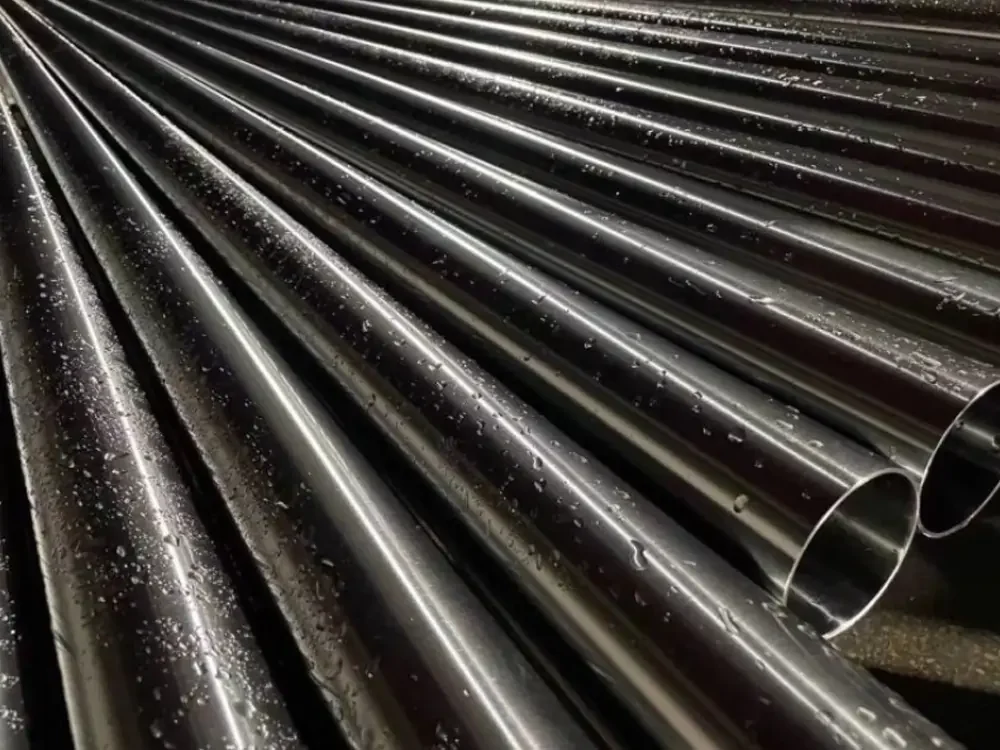
- There is a layer of chromium oxide to keep off rust. This renders the stainless steel tubing non-corrosive.
- Chemical, acid, and salt water and moisture resistant.
- The stainless steel tubing is very strong tensile-wise.
- They can withstand deformation and weight overload.
- They are used in high-pressure, high-temperature systems by manufacturers in industries.
- The mean temperature resistance is between -196 °C and over 800 °C.
- Most appropriate for boilers, furnaces, cryogenic, and exhaust lines.
- The stainless steel pipes are smooth and non-porous. It does not harbour bacteria. Storage-qualified in pharmaceuticals, dairy, food processing, and water systems.
- The stainless steel pipe is contemporary and sanitary. It is available in brushed, matte, polished, or mirror finish.
- They also reduce the long-run replacement cost.
- These tubes are sustainable. They provide 100 recycling capacity.
Stainless Steel Tubing vs. Other Materials
The stainless steel tubing has advantages and limitations. Other materials could be used for making tubing. Here is the comparison table for different materials that could be used in manufacturing.
| Materials | Advantages of stainless steel | Limitations of other materials |
| Carbon steel | The stainless steel tubes have higher corrosion resistance.
They have a better appearance. Stainless steel tubing does not require coating.
|
Carbon-steel tubes are prone to corrosion.
They usually require a coating or a protective layer for corrosion resistance. They have a shorter lifespan. |
| Copper | Stainless steel tubes are firm and rigid.
High-pressure applications. |
Copper tubes are easy to bend but tend to corrode readily.
|
| Aluminium | Strong and tougher
Stainless steel pipes perform better in high-temperature environments. |
Aluminium pipes or tubes get dents very easily.
They are soft and cannot bear high pressure. |
| Plastic (PVC) | Heat and pressure resistance
High performance and durability |
Cost effective
Do not resist high temperature and pressure. |
Applications
Stainless steel tubing is used in over 30 principal industries. Some top uses include:
1. Oil and Gas Industry
Stainless steel tubing is used for downhole applications in the oil and gas industry. These tubes are chemically resistant, making them suitable for use in chemical injection lines and heat exchangers. They can be used in an environment with elevated pressure and temperature.
2. Chemical and Petrochemical
These stainless steel tubes have applications in the processing lines. They can be used in distillation equipment and acid transport. People in business use them in high-temperature reactors.
3. Food, Dairy, and Beverages
One significant application in the food industry is in milk lines. They can be used in brewery equipment and sanitary piping. Clean-in-place (CIP) systems in the food industry use stainless steel tubing.
4. Pharmaceuticals and Biotechnology
Instrumentation tubing and bioreactor systems are made of stainless steel tubing. WFI lines and sterile fluid paths have this tubing for better results.
5. Urban Planning and Building Technology
Stainless steel tubing can be used for
- Handrails
- Balustrades
- Structural frames
- Façade elements
6. Automotive
The exhaust, fuel, and brake lines in an automobile are made of stainless steel tubing.
7. Aerospace and Defence
The tubing could be used in
- Hydraulic lines
- Fuel delivery systems
- Ultralight construction materials
8. Power Generation
The industry uses stainless steel tubing in:
- Boiler tubes
- Condenser tubes
- Heat exchanger nuclear plants
9. Marine and Coastal Engineering
Due to the high chloride resistance, they could be used in:
- Boat frames
- Piers and docks
- Saltwater piping
Selection of the Appropriate Stainless Steel Tubing
The choice of the appropriate tubing must be made with a close examination of multiple facts:
- In the initial stage, assess the environment. It means the use of chemicals, their concentration, and the operating temperature. After that, determine the system pressure to select the appropriate tubing grade.
The grade of the stainless steel tubes is selected according to the requirements.
- 304 is used where a general resistance is required.
- 316 is used when a stronger chloride protection is required.
- Duplex is used where a high-strength requirement is necessary.
Welded vs Seamless steel tubes selection involves
- For very high-pressure applications, choose seamless tubes.
- For cost-effective, precise, and well-polished applications, choose welded tubes.
The size, wall thickness, ID, length, and acceptable tolerances are key factors in selecting an appropriate tubing. A range of surface finish options for stainless steel tubing is available to customers. They can be finished in decorative, industrial, brushed, polished, or electropolished finishes, as well as ornamental, sanitary, or architectural finishes.
- Do not violate ASTM, ASME, EN, and order an MTC.
Conclusion
Stainless steel tubing is a critical view of modern engineering and design. The combination of characteristics like:
- Resistance to corrosion
- Strength
- Ability to work at high temperatures
- Hygienic properties
People in business choose the right tubing based on knowledge of grades, shapes, and sizes. They always focus on the manufacturing techniques and the required performance. Having a clear idea of all these factors, they will be able to select a tubing that works safely, efficiently and reliably in any given application. Stainless steel tubing for construction, machinery, transportation, or sanitation is a long-term investment. It would be a sensible investment in the present and the future due to its durability, low maintenance requirements, and high-quality recyclability.