
Cold rolling and hot rolling are the two primary methods for producing stainless steel. They differ in processing temperature, product performance, and areas of use.
Hot rolling is mainly processed at high temperatures. During this process, the billet is heated to over 1000°C, and the material becomes more malleable and easier to form. Then, the heated billets are sent to the rolling mill, where they are repeatedly rolled at high pressure until they reach the required thickness and size. After rolling is complete, when the steel plate cools, a black oxide scale forms on its surface. That is a common feature in hot-rolled stainless steel.
Cold rolling is usually performed at room temperature and primarily uses hot-rolled steel as a raw material. As there is no thermal softening effect, this process requires a higher rolling force and more precise equipment. Meanwhile, annealing is a crucial step in the cold-rolling process, aimed at eliminating internal stress caused by plastic deformation and restoring the material’s ductility. Cold rolling demands careful surface treatment. It’s essential to get rid of iron oxide scale using acid washing or other cleaning methods. This is vital for maintaining process efficiency and ensuring product quality.
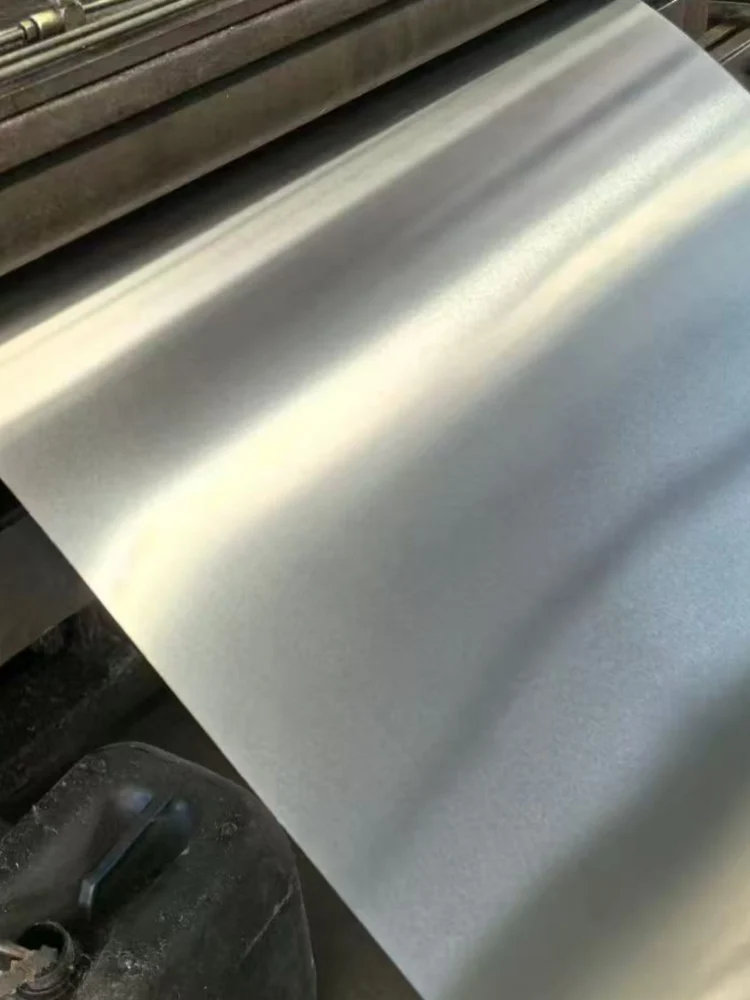
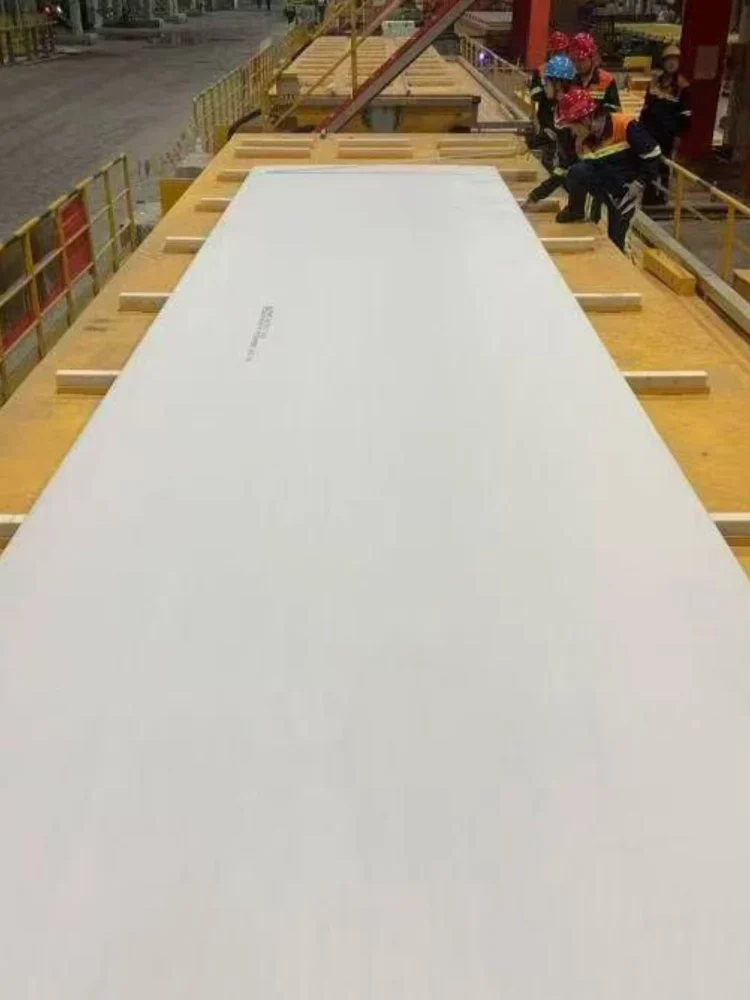
Different surfaces
The surface of hot-rolled stainless steel forms an oxide scale, making it relatively rough. Although most of the scale can be removed by acid washing, some indentation marks often remain. The surface roughness of hot-rolled steel is mostly Ra 12.5-25 μm. In contrast, cold-rolled stainless steel has a smooth, mirror-like surface, so the surface roughness value is as low as Ra≤1.6 μm. This outstanding surface finish makes cold-rolled stainless steel suitable for applications with high aesthetic appearance requirements.
Different thickness tolerances
Hot-rolled products usually have a large thickness tolerance, typically ±0.1 to ±0.3 millimeters. The cold-rolling process provides high dimensional accuracy, with thickness tolerance strictly controlled within ±0.01 to ±0.05 mm. Therefore, cold-rolled stainless steel is primarily used in the manufacture of precision components.
The differences in hardness
Hot-rolled stainless steel has a relatively low hardness, making it easy to process and form. At the same time, it can reduce energy consumption and tool wear, thereby lowering overall processing costs. On the contrary, cold-rolled stainless steel has both high hardness and strength. This enhances its applicability in structural applications. However, this requires greater force during the production process and may lead to increased mold wear.
Applications
Hot-rolled stainless steel is widely used in large-scale engineering projects. For instance, in the construction industry, it is usually used to manufacture structural components. Its excellent mechanical properties and cost-effectiveness make it an ideal choice for applications that require significant material input. In mechanical engineering, hot-rolled steel is often used in the basic frames and supports of heavy machinery. In these places, dimensional accuracy is more important than structural integrity and economic benefits.
Cold-rolled stainless steel offers an excellent surface finish and dimensional accuracy, making it ideal for precision manufacturing. In the electronics industry, cold-rolled steel fits tight standards. It provides the necessary look and size for components such as computer and mobile phone cases. In addition, in the medical device industry, materials must meet strict standards for precision and surface cleanliness.
The cold-rolling and hot-rolling processes of stainless steel each have their own advantages. Only by choosing based on specific application scenarios and requirements can their full value be realized. In actual production and procurement, fully understanding the differences between the two is the key to making correct decisions.