
Introduction
The wall thickness of the steel pipes determines their applications. Whether to use them in industrial, residential, and commercial projects. The buyer focuses on the material and the diameter. But the main factor in selecting stainless steel pipe for specific applications is wall thickness. Factors that depend on the wall thickness are:
- Resistance tolerance
- Durability
- Weight tolerance
- Temperature tolerance
The applications for the thin and thick stainless steel pipes are very different. The major use of the thin-walled stainless steel pipes is in lightweight, flexible, and cost-effective applications. If the engineer requires exceptional strength, extreme conditions, and pressure resistance, they must use thick-walled stainless steel pipes.
There are some differences between the two dimensions of stainless steel pipes. Understanding performance, safety, and risk is crucial before making any selection. This piece discusses the differences between thin and thick stainless steel pipes. After knowing the pros and cons, the engineers can make an informed decision.
The Differences Between Thin-Wall and Thick-Wall Stainless Steel Pipes
There are some differences between thin-wall and thick-wall stainless steel pipes. Here is the detail of all the differences:
| Features | Thin stainless-steel pipes | Thick stainless-steel pipes |
| Wall thickness | Lower thickness | Higher thickness |
| Weight | Low | Heavy |
| Manufacturing process | Cold drawing | Hot drawing |
| Pressure resistance | Low or medium | High |
| Material usage | Low | High |
| Burst resistance | Low | High |
| Transportation cost | Less | More |
| Initial cost | Less | More |
| Risk of deformation | More | Less |
| Durability | More | Less |
Wall thickness range & common schedules
The plan is based on the thickness of the stainless steel pipes. For example, SCH 5 to SCH 80. The difference in pipe diameters determines the schedule of stainless steel pipes.
Pipes with lower schedules, such as SCH 5 to SCH 10, are thin-walled stainless steel pipes. They don’t weigh much and are simple to move around.
The schedule numbers from SCH 40 to SCH 80 apply to thick-walled stainless steel pipes. The inside and outside diameters of these pipes are smaller.
Process of Manufacturing
The manufacturing process for thin stainless steel pipes is cold rolling. Manufacturers use this method to get a better surface and more accurate measurements. Using this technique provides better control over the wall thickness. This method is used to make products with aesthetic appearances.
On the other hand, thick stainless steel pipes are manufactured by hot drawing and hot extrusion. Manufacturers are using this process to get better shapes and consistent thickness. Pipes produced by this process can withstand high and extreme pressure without developing defects.
Weight per meter
The most prominent difference between the thick and thin stainless steel pipes is their weight. For the stainless steel pipes, the dimension weight per meter is measured.
Thin-wall pipes have less weight per meter than thick-walled pipes. They are easy to transport and handle. Their installation is easier and cheaper.
The material content of the thick stainless steel pipes adds extra weight. Adding the extra material strengthens the pipe. The cost of transportation becomes a bit high.
Weight considerations are especially important in high-rise buildings, suspended systems, and mobile applications.
Pressure & burst resistance
Stainless steel pipes are used in many applications because they can withstand high pressures. The performance of the pipe depends on its pressure resistance.
Because thick-walled stainless steel pipes have a higher weight per meter, they can withstand higher pressure. High pressure won’t harm the pipe or cause it to rupture. These pipes are used for a variety of tasks across industries, including power generation, chemicals, and oil and gas.
Compared to thick-wall stainless steel pipes, thin-wall stainless steel pipes can withstand less pressure. For applications requiring low or medium pressure, these pipes are perfect. Application of high pressure to the thin-walled pipes will deform them.
Thermal conductivity & heat transfer efficiency
The wall thickness of the stainless steel pipes decides their thermal conductivity and heat transfer efficiency.
If the walls of the stainless steel pipes are thin, they will transfer heat faster. There are fewer materials available for the heat to pass through. These types of pipes are ideal for heat exchangers and hot-water distribution.
Stainless steel pipes with thick walls have more material to transfer heat. The heat won’t dissipate during high-temperature applications across different manufacturing industries.
Flexibility & bendability
As the name suggests, the thin-wall stainless steel pipes are easier to bend. In areas where the pipes require bending and working in tight spaces, these thin-wall pipes are ideal. They can be shaped with less force and fewer specialized tools.
The thick stainless steel pipes have thicker walls, making them more difficult to bend. There is always a need for heavy machinery for bending pipes. The greater rigidity of the thick stainless steel pipes determines their strength.
Cost of raw material & production
Many manufacturer decide to use stainless steel pipes based on their budget. The raw materials for thick- and thin-wall stainless steel pipes are almost the same. The amount of the raw material required will determine the cost of the thin-wall stainless steel pipes.
Compared to thick-wall stainless steel pipes, thin-wall stainless steel pipes are less expensive to manufacture. The cost of transporting thin stainless steel pipes is lower because of their light weight.
The use of raw materials for manufacturing thick stainless steel pipes is high. The cost of producing the thick stainless steel pipes will rise as a result. Although these pipes are more durable and stronger, the cost of transportation is very high.
Installation difficulty
The installation of pipes for any application is essential. The thin, lightweight outer wall of stainless steel pipes makes them very easy to handle and cut. But there is a risk of bending and deformation when handling thin stainless steel pipes.
The greater weight and the rigidity of the thick stainless steel pipes make them harder to install. There are many different highly equipped components for their installation. The handling and transportation costs for them are quite high.
Pros and Cons of Thin-Wall Stainless Steel Pipes
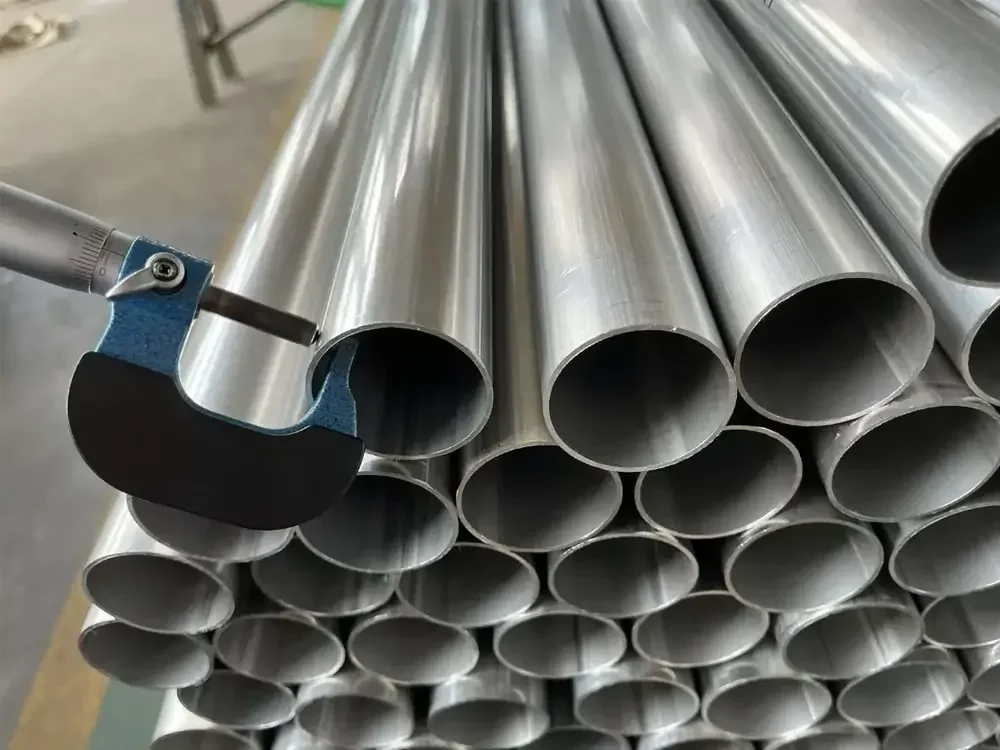
Stainless steel pipes with thin walls are commonly adopted for residential, commercial, and light industrial purposes.
Advantages
The following are the main benefits of utilizing thin-wall stainless steel pipes:
- The thin stainless steel pipes’ lightweight makes them ideal for rapid transport.
- They are simple to handle and install.
- The installation will require less labor.
- The grades 304 and 316 stainless steel pipes are corrosion-resistant.
- These pipes are ideal for water, food processing, and sanitary applications.
- These pipes have excellent heat transfer properties, making them essential in HVAC systems, hot water lines, and heat exchangers.
- They are flexible, thus they can be easily bent and shaped to suit complex layouts and compact installations.
Disadvantages
The primary disadvantage of thin-walled pipes is that:
- The thin walls make them low-pressure-resistant.
- The thin walls get damaged during handling and installation.
- The lifespan of thin stainless steel pipes is shorter.
Benefits and Drawbacks of Thick-Wall Stainless Steel Pipes
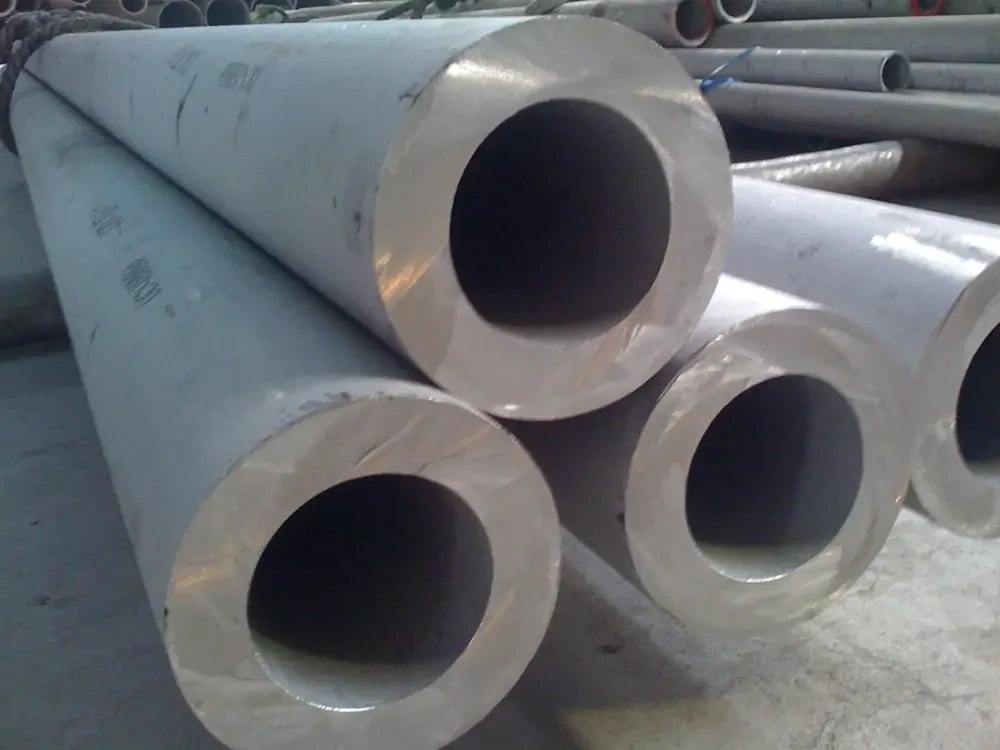
Stainless steel pipes with thick walls are designed to be heavy-duty. The details of the advantages of using thick-walled stainless steel pipes are as follows:
Advantages
- Their greatest advantage is their high strength and durability.
- Thick stainless steel pipes can withstand the high internal pressure and extreme conditions.
- The wear, corrosion, and mechanical resistance make them ideal for high-duty usage.
- Pipes with thick walls are also structurally more stable, which is significant for their use in load-bearing applications.
- The fact that they have a long service life means they can last longer without many replacements, thereby minimizing long-term maintenance costs.
Disadvantages
Some drawbacks are associated with them, which are as follows:
- Thick-wall stainless steel pipes are heavier, and therefore, transportation and installation are more complicated and costly.
- These pipes are also expensive in terms of initial expenditure, due to greater use of materials and more sophisticated production methods.
- They are less flexible and might be difficult to install in narrow and curved areas.
FAQs
What is the Definitive Thickness of Walls in Stainless Steel pipes?
The separation between a pipe’s outside and interior. It is commonly quantified using millimeters or a pipe schedule.
What are Thin-Walled Stainless Steel Pipes?
These pipes have comparatively thin walls relative to their diameter. They are not heavy, stretchable, and economical.
Thick-Walled Stainless Steel Pipes?
Thick-walled stainless steel pipes offer exceptional strength and pressure resistance. They are generally used in oil and gas pipelines, chemical plants, power facilities, and other applications involving high temperatures or high pressures.
Conclusion
The decision between thin- and thick-walled stainless steel pipes is not about which is best. Rather, the appropriateness of the application is the major concern.
- Lightweight, low- to medium-pressure systems that require flexibility, heat transfer efficiency, and cost-effectiveness use thin-wall pipes. They are extensively employed in domestic plumbing, heating, and sanitation.
- Conversely, thick-wall pipes are built for durability, strength, and safety. They are superior in high-pressure, high-temperature, and high-risk industrial settings where failure is not an option.
By considering pressure requirements, environmental factors, budget, and installation factors, you can choose the most appropriate wall thickness to ensure performance, safety, and long-term stability.