
Introduction
Stainless steel (SS) pipes are among the most preferred pipes due to their versatility and unique properties. These pipes are highly resistant to rust and perform exceptionally well in moist or chemically aggressive environments (especially those containing acids or chlorides).
Market projections indicate that, driven by increasing demand, the stainless steel pipes market is expected to reach $48-50 billion in 2032. With a wide range of uses, SS pipes are used across multiple industries. They are mainly used for transporting oil and gas, for aesthetic purposes, and for structural support, medical, and food processing applications.
Let’s dive into the article to know more about stainless steel pipes.
Overview Of Stainless Steel Pipes
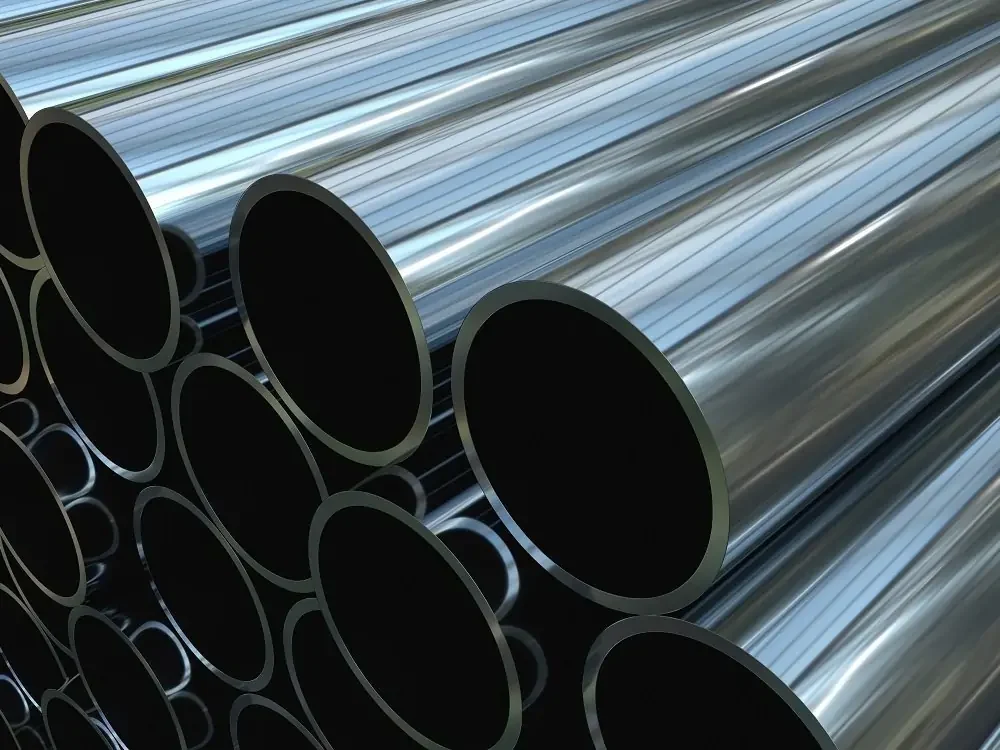
Stainless steel pipes are high-quality, durable, rust-resistant hollow metal tubes. They are based on an iron-based alloy containing 10.5% chromium. Depending upon the grade, other elements may be added, such as nickel and molybdenum. The sufficient chromium content in stainless steel enhances its corrosion resistance by forming a passive oxide layer.
The birth of stainless steel dates back to 1913. This was when Harry Brearly, in Sheffield, found chromium steel while seeking corrosion-resistant steel for gun barrels. He originally called it “rustless steel.” This laid the foundation of SS steel, which requires sufficient chromium to confer corrosion- and rust-resistant properties.
After this revolution, several developments led to its wider adoption by manufacturers. This paved the path to the use of stainless steel in tubing and pipe manufacturing.
Today, stainless steel pipes are available in various grades and types. They are most widely used across multiple industries for various purposes. This is due to the superior properties that set them apart from other steel pipe varieties. These include cleanability, strength, durability, aesthetics, and more.
Material Composition and Characteristics of Stainless Steel Pipes
Stainless steel pipes are mainly an iron-based alloy, composed of components including:
- Iron: It serves as the base material, accounting for 60-70% of the alloy.
- Chromium: 10.5% to 30% in composition bases of the specific grades.
In various stainless steel, other materials added in different quantities are:
- Nickel (8-15%)
- Molybdenum (0.5-3%)
- Carbon (0.01- 1.2%)
- Others include manganese (0.5-7%), silicon (0.5-1.5%), nitrogen (0.1-0.2%), sulfur (0.01-0.03%), phosphorus (0.02-0.03%), etc.
Due to this material composition, stainless steel possesses some unique characteristics. These are as follows:
- Corrosion resistance: Excellent, due to the chromium oxide layer; enhanced by molybdenum for chloride resistance.
- Low-temperature cryogenic resistance: It retains high toughness and ductility at subzero temperatures, often gaining strength. At the same time, it resists brittle cracking in extreme cold.
- Strength and durability: It has the ability to withstand higher pressure conditions and tensile stress, providing high wear resistance
- Magnetic properties: Some stainless steel grades, such as ferritic grades with low nickel content, exhibit good magnetic properties.
- Cleanability: It is more hygienically cleanable than aluminum, glass, and other materials.
- Aesthetic: It offers an attractive finish and a pleasing appearance.
Types of Stainless Steel Pipes
Classification by Production Method:
Seamless Pipes: These pipes don’t require welding. For that, a solid billet is pierced to form a hollow cylinder, extruded, and rolled to the required size. Due to no seams, the strength and durability stand out. They can tolerate high pressure and temperature, and offer superior corrosion resistance. Due to such properties, they are used in the mechanical, chemical, and petrochemical fields.
Welded Pipes: Stainless steel pipes with seams are welded. These welds can be longitudinal or along the strip steel coil, and they can be welded using various methods. These include submerged arc welding (SAW), electric resistance welding (ERW), metal inert gas (MIG), and others. This type of welding makes them more affordable, but their strength may be lower than that of seamless pipes. However, they offer good resistance to pressure and corrosion and are highly versatile. They are used for structural support in plumbing applications.
Classification by Material/Grade:
Common stainless steel grades are as follows:
| Varieties | Grade | Composition | Characteristics |
| Austenitic grades | 304 | Iron: balance
Chromium: 18-20.0% Nickel: 8-10.5% Carbon: ≤0.08% |
|
| 304L
(low-carbon) |
Iron: balance
Chromium: 18-20% Nickel: 8-10.5% Carbon: ≤0.030% |
||
| 316 | Iron: balance
Chromium:16-18% Nickel: 10-14% Molybdenum: 2-3% Carbon: ≤0.08% |
||
| 316L
(low-carbon) |
Iron: balance
Chromium:16-18% Nickel: 10-14% Molybdenum: 2-3% Carbon: ≤0.030% |
||
| 321 | Iron: balance
Chromium:17-19% Nickel: 9-12% Carbon: ≤0.08% Titanium: lower or max 0.7% (for stabilization) |
||
| Ferretic grade | 430 | Iron: balance
Chromium:16-18% Carbon:0.12% |
|
| Martensitic grade | 410 | Iron: balance
Chromium:11.5-13.5% Carbon:0.15-0.3% |
|
| Duplex | 2205 | Iron: balance
Chromium:22-23% Nickel: 4.5-6.5% Molybdenum: 3% Carbon: 0.030% |
|
Classification by Application:
-
- Decorative pipes: these stainless steel pipes are known for their shiny, smooth surface finish. That’s why they are used in decorative and architectural applications such as furniture, stair railing, and other domestic applications.
- Product pipes: Different components and products, such as hollow shafts, bearings, and other automotive components, often include small pipes; these are usually stainless steel. These pipes offer machinability and dimension accuracy, vital for such applications. Pipe standards for such applications include A554 and ASTM A511.
- Industrial pipes: Stainless steel pipes with high resistance to corrosion, temperature, and chemicals, and offering high tensile strength, are used in various industries. They are used in chemical and food processing lines, as well as in large industrial units, for transporting oil, gas, and other fluids. Food industries use SS grades 304, 304L, 316, 316L, and 321, depending on the specific industry. At the same time, the chemical industry uses 321, 347, 317L, 904L, and others.
- Sanitary pipes: These stainless steel pipes are essential where hygiene is paramount. It can be used in various industries to prevent corrosion and contamination. The ASTM A270 pipe standard applies to such applications.
- Special-shaped pipes: These pipes can be customized to shapes other than cylinders. These can be used for special cases, such as architectural applications or special equipment.
Manufacturing Process of Stainless Steel Pipes
The main manufacturing steps of stainless steel pipes involve some steps that are discussed below:
- Selection of raw materials: The process begins by selecting the core materials, including iron, chromium, and nickel. Adding them all to a blast furnace that melts the material. Here, the temperature is around 1200 degrees. A solid billet or slab is formed. Other materials, such as molybdenum, carbon, sulfur, phosphorus, and more, are added to impart distinct properties.
- Formation of pipes: Slabs or billets are pierced, rolled, and extruded into steel sheets. For welded pipes, cylindrical sheets are formed, whereas for seamless pipes, the material is machined from the centre, producing a hollow cylinder.
- Welding: Stainless steel-striped sheets are welded at the edges to produce cylinders. Here, different welding methods are used as required. This step is omitted for Seamless pipes as they do not require welding.
- Post-formation treatments: Heat-treatment processes are carried out after the pipes are formed. This involves annealing, normalization, and other processes to add strength and enhance mechanical properties. The other process involves descaling, straightening, etc.
- Cutting and finishing: Now, damaged parts are removed, and the pipes are cut and sized, and then undergo the finishing process (if required).
Advantages and Disadvantages of Stainless Steel Pipes
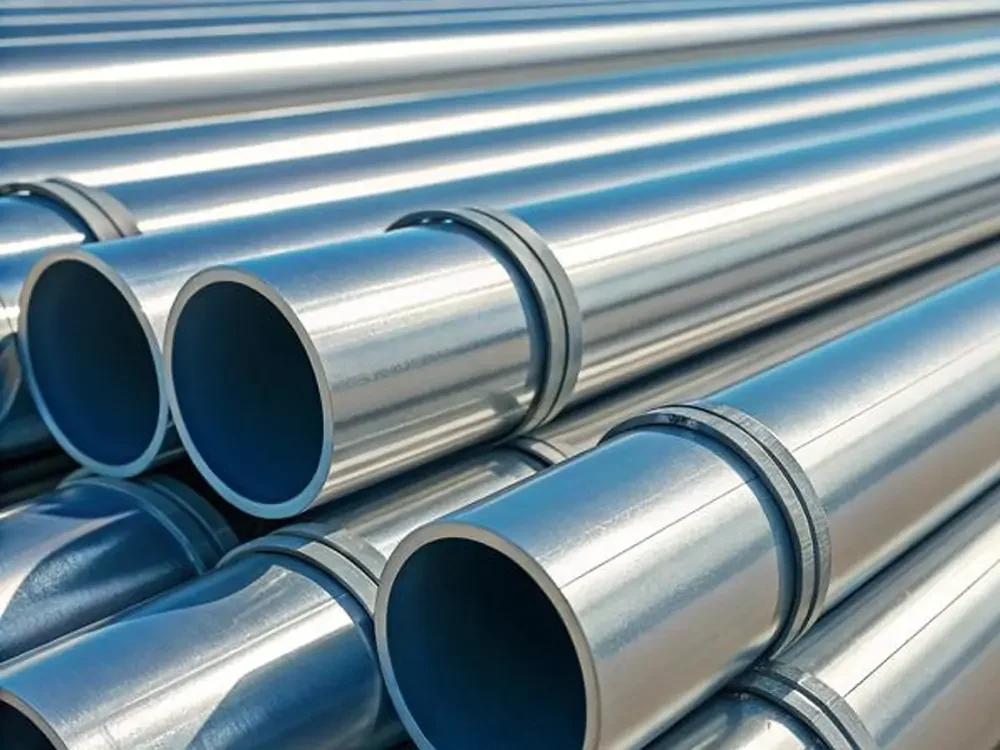
Advantages:
- Highly corrosion-resistant: When chromium reacts with oxygen in a controlled environment, it forms a passivation oxide film. This enhances stainless steel’s corrosion resistance and is beneficial in various applications and industries.
- 100% recyclable: When unused, it can be recycled, and other useful products can be made with the material.
- Appealing look: The mirror finish and polished surface are outstanding. It can be beneficial for aesthetic and architectural applications when looks are crucially important.
- High strength and durability: With all the above, it also serves high tensile strength and durability. It can withstand high pressure and is used in structural applications serving demanding environments.
Disadvantages:
- High-priced: The high cost of raw materials drives up stainless steel pipe prices.
- Challenging Installation: Installation requires specialized tools and equipment, which can be difficult for individuals with no experience.
- Difficulty in welding: Stainless steel pipes are heat-resistant, which makes them prone to welding difficulties.
- Heavy: The heavy weight can lead to many difficulties. These include transportation, installations, etc.
Conclusion
To conclude, this article provides detailed insight into stainless steel pipes, which are among the preferred and most commonly used pipes for various applications. The unique component, chromium, in the iron-based alloy, along with other components, sets these pipes apart. The addition of chromium results in high corrosion resistance. It also offers heat resistance, high strength, durability, and a highly attractive look. With so many types and grades, you must choose according to your preferred applications. Purchasing high-quality stainless steel pipes from a reliable manufacturer is always important. For queries, contact us today!