
Stainless steel fittings play an essential role in the piping systems of many industries. Their usage in oil and gas pipelines makes them popular. They are a pillar in several manufacturing systems.
Stainless steel does not corrode as compared to ordinary steel. Stainless steel fittings come in various types, including compression and tube fittings. Flanges and pipe nipples are also types of stainless steel fittings. This guide will help you choose the appropriate fittings.
These fittings assemble pipes and regulate fluid flow in a harsh environment. Dependable operations in chemical plants need these fittings.
A stainless steel pipe fitting is suitable for high-pressure and high-temperature applications. It is best suited to industries where downtime and maintenance expenses may be a big issue.
The content below discusses the types of stainless steel fittings and their popular grades. Also, it highlights their uses and maintenance advice. This guide will help engineers and procurement experts in choosing stainless steel fittings.
Types of Stainless Steel Fittings
Stainless Steel Fittings are available in various types or models. Each type performs a specific role in a piping network.
Cross Fittings
- Cross fittings join four pipes in a cross fashion.
- Their implication is in multi-directional gas delivery systems.
- Moderate pressure is necessary for these fittings.
Couplings and Unions
- Couplings and Unions play a key role in the piping network. Systems that require frequent replacements have couplings and unions.
- Two pipes are coupled in a parallel way. For maintenance, they can be easily disconnected via unions.
Elbow Fittings
- Elbows divert the flow of pipelines. They usually come in 45°, 90°, and 180 °.
- These fittings are for layouts where straight runs are almost impossible.
- Proper selection of the elbow decreases the pressure drop and flow turbulence.
Reducer Fittings
- To connect pipes of varying sizes, manufacturers use reducers.
- They offer flow transition and reduce turbulence.
- Engineers use concentric reducers in vertical pipes and eccentric reducers in horizontal runs.
Tee Fittings
- The common uses of Tees are in distribution lines and production lines.
- They permit the splitting or combining of fluid and gaseous streams.
- Manufacturers use Tees to make a T-shaped junction between three pipes.
- Reducing tees are essential when there is a diameter variation between connected pipes.
Nipple Fittings
- Nipples are small in size, so they are suitable for tight assemblies.
- They are short pipes having threaded ends. They are applied to connect tightly fitted valves.
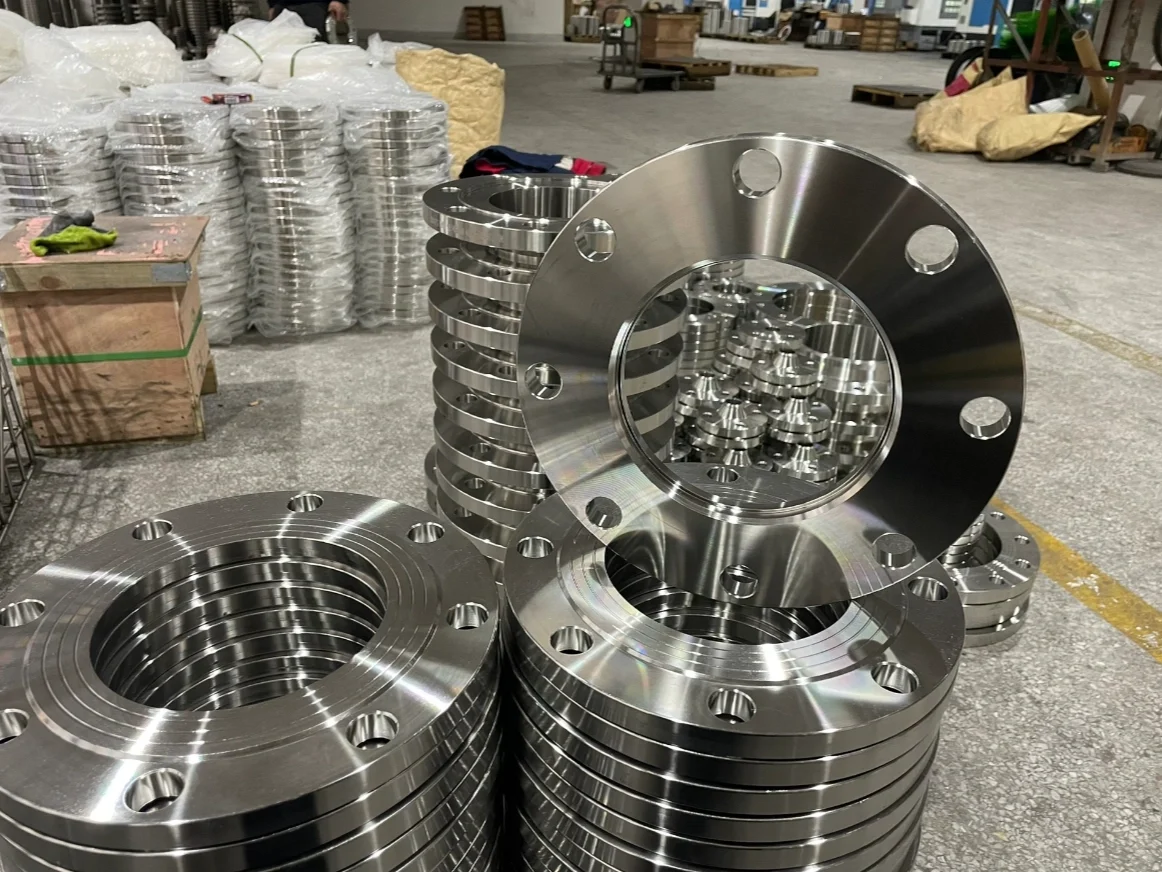
Flange Fittings
- Flanges join pipes to valves, tanks, and pumps.
- Stainless steel flanges are resistant to high temperature and pressure.
- They are quick to install or inspect. They modify the system.
Cap and Plug Fittings
- These fittings have pipe ends capped and threaded holes plugged.
- They both prevent leakages in pipes.
- They apply in the case of system maintenance.
Forged and Buttweld Fittings
- Forged fittings enhance strength and grain structure. They are suitable for high-pressure systems at smaller nominal pipe sizes.
- Buttweld fittings are welded to the pipes. They offer easy internal flow routes. They lessen the loss of pressure.
- Both fittings are of great importance when high integrity is needed. They are suitable for the pipeline, which has a large diameter.
Common Grades of Stainless Steel Fittings
Stainless steel fittings are available in common grades. In the industry, it is crucial to select the appropriate type of stainless steel grade.
These grades influence:
- Corrosion resistance
- Mechanical strength
- Long-term performance.
304 Stainless Steel
- 304 is the most widely used grade.
- It has good corrosion resistance and mechanical properties.
- It applies to water systems and food processing lines.
- It is not very efficient against exposure to chlorides and saltwater.
316 Stainless Steel
- The main component of stainless steel 316 is molybdenum. It has more nickel.
- It increases the pitting corrosion and resistance to chemical attacks.
- They are preferred for chemical, marine, and coastal environments.
High-Carbon Grades (304H and 316H)
- High-carbon grades give better tensile strength at high temperatures.
- These are applicable in power stations, boilers, and thermal processing units.
Low-Carbon Grades (304L and 316L)
- Low-carbon stainless steels reduce intergranular post-welding corrosion.
- They play a major role in structural stability and weldability.
- Applications of these grades include: heat exchangers, pressure vessels, and welded pipelines.
Dual and Duplex Grades
- Dual grades satisfy several specifications. They make compliance easier.
- They fit well in aggressive industrial settings characterized by high stress.
- Duplex stainless steels are high-strength and high-corrosion-resistance steels.
Applications of Stainless Steel Fittings
Industries having reliability and durability issues utilize stainless steel fittings.
Marine and Coastal Usage.
- In normal metals, saltwater accelerates corrosion. The stainless steel, 316 and 316L, provide better resistance to pitting.
- These grades give corrosion protection in marine and coastal applications.
Oil and Gas
- Stainless steel fittings ensure the integrity of the systems.
- They play an essential role in high-pressure oil and gas pipelines.
- Their common use is in refineries, offshore rigs, and transmission lines.
- They minimize maintenance risks in the pipeline network.
Chemical Processing
- The chemical plants require materials that are resistant to aggressive substances.
- Stainless steel fittings last longer and reduce the risk of leakage.
- They do not corrode in a chemically hostile atmosphere.
Power Generators and Heat Exchangers.
- The cycles of high temperatures and high-pressure gas demand material reliability.
- Forged and buttweld fittings are employed in boilers, heat exchangers, and turbine pipelines.
Food and Beverage
- Hygiene in food and beverage production is required. Stainless steel fittings are easy to clean.
- They do not encourage bacterial growth. They ensure that the products are pure and meet the sanitary standards.
Pharmaceutical and Medical Systems.
- The pharmaceutical systems require airtight links. They also need purity of materials.
- The stainless steel fittings facilitate adherence to the hygiene standards.
- These systems preserve the integrity of the processes.
Conclusion
In stainless steel, fittings are not only connectors. They enhance the durability of piping networks in industries.
Stainless steel fittings are suitable for oil and gas applications. They are pillars in the chemical and marine industries. These fittings are the best choice for power generation industries. They have great importance in the pharmaceutical and food processing sectors.
The stainless steel fittings are reliable in harsh environments. Proper grade and a right fit make a great difference. Once chosen correctly, they help ensure safe, efficient operations in industries.
For engineers and procurement groups, it is important to select the appropriate fitting type. Grade and material specifications are also their primary concerns. The right choice extends the service life of industrial pipelines. It minimizes downtimes and safeguards expensive infrastructure.
Frequently Asked Questions (FAQs)
What are the primary material grades of stainless steel fittings? What is the difference between 304 and 316?
Stainless steel fittings are available in grades 304 and 316, as well as the low-carbon versions 304L and 316L.
304 stainless steel is corrosion-resistant. It has good mechanical strength. But it is low in chlorides.
Molybdenum is present in 316 stainless steel. They resist chemical attack and saltwater corrosion. 316 has a greater preference in marine, chemical, and highly corrosive environments.
Will stainless steel fittings rust?
Stainless steel develops a protective layer of chromium oxide. When the surface is damaged, it becomes rusty. In oxygen, this layer repairs itself and prevents rust.
How to maintain and clean stainless steel fittings?
Periodic cleaning removes pollutants such as salt, chemicals, and dirt. Apply mild solvents or authorized cleaners. Corrosion resistance and service life guarantee the proper maintenance.