
Stainless steel flanges have a disc-like shape. These flanges are used as connectors for valves, pipes, and equipment. These flanges have a variety of applications in modern piping systems. They are of great importance for their durability at high temperatures.
Other applications of these flanges are in power generation, chemical processes, gas and oil, and medicinal products. These flanges are also widely used in construction sectors.
This article discusses the common materials and standards for stainless steel flanges. Moreover, the variety of stainless steel flanges. Their salient characteristics and uses in the industry. Also, the pros and cons of various stainless steel flange types are discussed.
Common Materials and Standards
Stainless steel flanges are manufactured to specific grades and conform to international standards. Balancing the right material and standard is necessary for high performance in demanding conditions.
Common Materials:
The types of stainless steel flanges used are F304, F304L, F316, F316L, F321, and F347.
- Flanges manufactured from grade 304 stainless steel are highly valued for their corrosion resistance. It has approximately 18 percent chromium and 8 percent nickel.
- The grade of 316 stainless steel is equivalent to 304. It also has an application in stainless steel flange material. It is, however, added with 2 -3 molybdenum.
- Other materials of stainless-steel flanges are also common: High Carbon Grades (304H and 316H) and Dual Grades (304/304L or 316/316L)
- Stainless steel materials also include Low Carbon Versions (304L and 316L) grades and Duplex Stainless Steels (F51 and F53).
Common Standards:
The following are the standards that apply to stainless steel flanges. They provide global compatibility, interchangeability, and safety of pipeline systems.
- AWWA C228 standard: It addresses stainless steel flanges specifically. It’s used in waterworks systems.
- ASME B16.47 standard: It refers to flanges of pipelines with a large diameter (NPS 26-60).
- ASTM A240 standard: It applies to stainless steel plates containing chromium and chromium-nickel.
- ASME B16.34 standard: It specifies the pressure and temperature ratings for welded valves connected to flanges.
- ASTM A182 standard: It is a coating over forged or rolled components of piping systems. It can be utilized in high-temperature applications.
- ASME B16.5 standard: Its range is 1/2 inch to 24 inches. It is used to specify flange dimensions, pressure ratings, and flange tolerances.
- Other typical standards include pressure ratings, set at Class 150, 300, 600, 900, 1500, and 2500.
Types of Stainless Steel Flanges
Every kind of stainless steel flange has its own characteristics and uses. These flanges are subject to pressure, temperature, and installation requirements. Their designs, features, pros, and cons are listed below.
Slip-On Flange
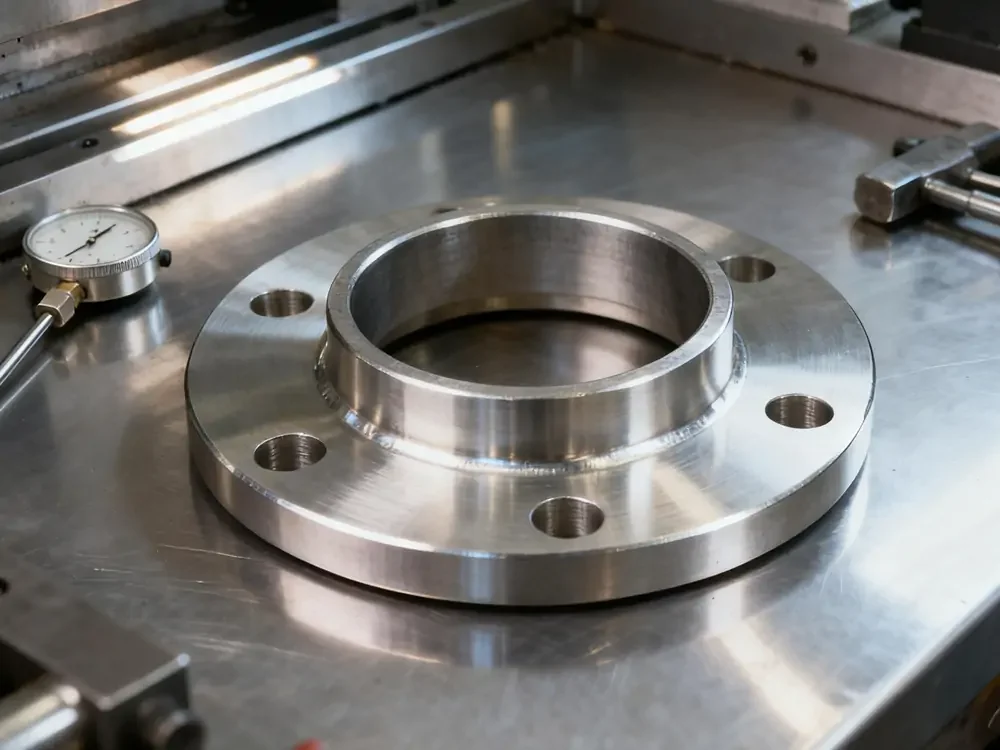
Definition: A slip-on flange is defined as a flat plate. It has a bore that slips directly over the pipe.
Design: It has a marginally bigger internal diameter than the pipe. It is designed to secure the connection of piping lines.
Features: Installing and aligning a slip-on flange is simple. It is appropriate for low-pressure use. Both sides need to be fillet-welded to prevent leakage.
Applications: Professionals use this flange in cooling water lines. It is also used in low-pressure pipeline systems. It is used in compressed air lines and fire-fighting lines.
Advantages: It is economical to fabricate. It requires less space than weld-neck flanges.
Disadvantages: It has weak fatigue strength. It does not have full penetration welds. Applications involving high temperatures or low pressure are not appropriate for it.
Blind Flange
Definition: A blind flange is also a flat plate with a solid disk. It blocks off the end of a valve or pipe and a pressure vessel opening.
Design: It has no bore in the centre with bolt holes around the perimeter
Features: It permits easy maintenance and inspection. It provides a very tight seal at the pipeline’s ends.
Applications: These flanges are applicable in testing lines. Their uses are in isolated pipelines, pressure vessel openings, and manifolds.
Advantages: It is easy to remove for repair or maintenance. It resists the pressure and provides a secure closure.
Disadvantages: It experiences high stress under pressure. It requires heavy gaskets and bolts for sealing.
Socket Weld Flange
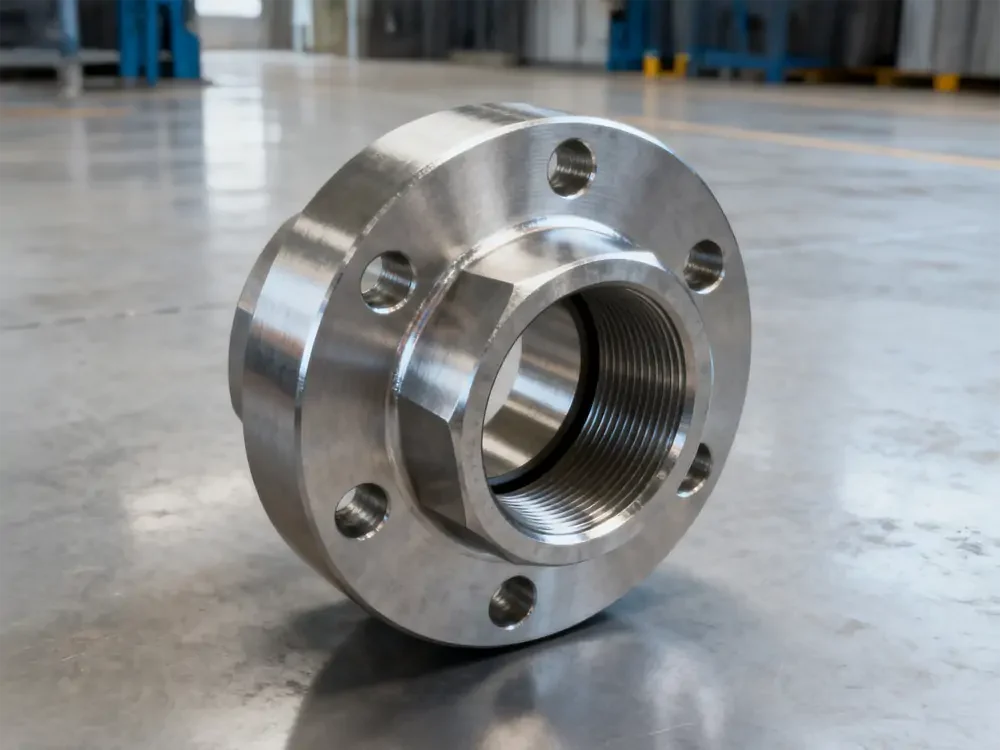
Definition: This flange is attached to the pipe with the help of a socket weld. During installation, this connector facilitates simple alignment.
Design: It has a socket-like recessed area for the pipe that fits in before welding.
Features: It ensures fluid flow with a smooth, proper bore. These flanges are suitable for small pipes that are below 2 inches.
Applications: Socket-weld flanges are particularly useful for pipelines that handle corrosive fluids. It is also valuable for high-pressure applications.
Advantages: This flange prevents leakage in piping systems. It is a reliable, strong joint for high-pressure systems.
Disadvantages: It is so tricky to clean and inspect socket-weld flanges. Because it creates crevices, it is not appropriate for cyclic applications.
Lap Joint Flange
Definition: This flange is attached to a pipe with the stub end. During installation, the flange itself remains free to rotate for alignment.
Design: Its design follows similar dimensions to other flanges. It does not have a raised face. At a bore, it has a curved radius to fit over the stub end.
Features: The flanges in systems are recycled, which corrode or erode so rapidly. This flange allows for easy dismantling. It is ideal for maintaining heavy systems.
Applications: It is commonly used in beverage plants and food processing. This flange is suitable for low-pressure pipelines.
Advantages: It is beneficial for systems that need to be disassembled. It is economical for large, expensive piping systems.
Disadvantages: This flange has limited capacity for temperature and pressure. For sealing, this flange depends on the stub end.
Threaded Flange
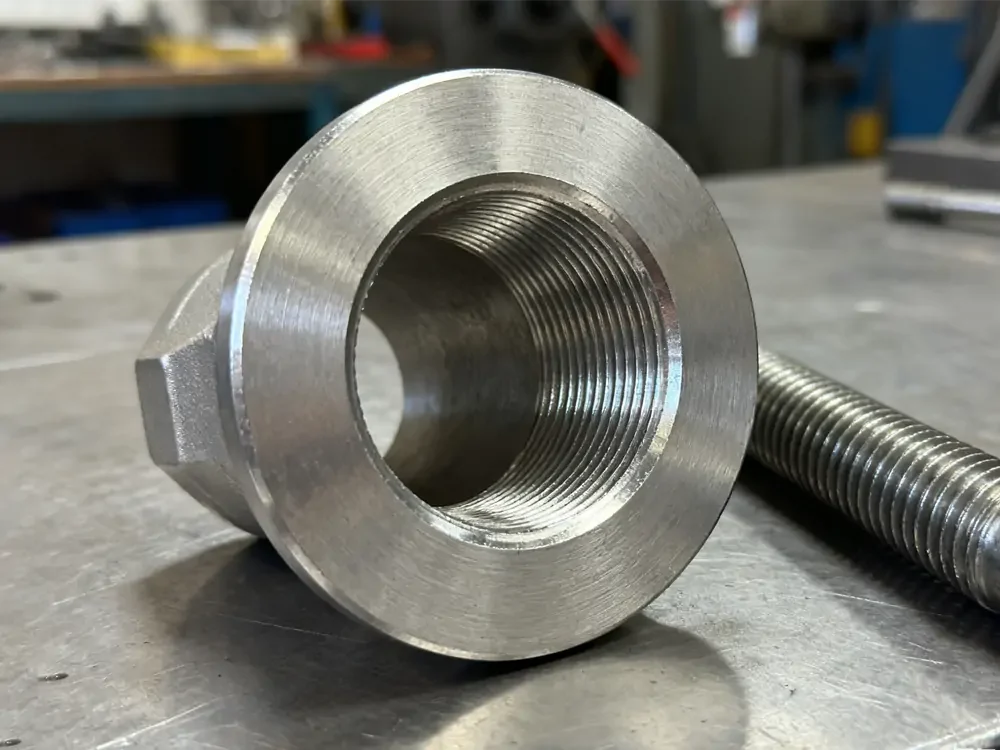
Definition: Another name for the threaded flange is a screwed flange. It connects to the pipe by threading without welding.
Design: This flange has internal female threads. To screw the threads directly onto a pipe’s external male threads. It eliminates the need for welding.
Features: This flange is suitable for non-welded joints. It is also ideal for non-toxic, low-pressure systems.
Applications: These flanges are suitable for use in explosive atmospheres where welding is hazardous. Its use is in water supply systems and small-diameter pipelines.
Advantages: These flanges create a leak-free connection. They are easy to install and remove without welding.
Disadvantages: These flanges are limited to smaller pipe systems of less than 4 inches. This limitation makes their services less demanding in terms of water or air. Their threads may leak over time under stress.
Plate Flange
Definition: This flange is defined as a flat flange. It is like a flat circular disk. It can be welded directly to pipe ends.
Design: Its structure is lightweight. It has bolt holes for a secure connection.
Features: These flanges have a stable and flat surface. They provide cost-effective construction using materials such as stainless steel or carbon.
Applications: Automotive sectors can use these flanges. They connect the parts of vehicle exhaust systems. They also handle other construction projects.
Advantages: These flanges, when used in chemical reactors, prevent leakage. They are lower cost and easy to fabricate.
Disadvantages: These flanges are not as strong as forged flanges. They are not suitable for hazardous applications. Also, they have poor rigidity.
Conclusion
The various types of stainless steel flanges serve specific purposes in industrial piping systems. All flanges, including slip-on, threaded, blind, lap joint, socket weld, and plate flanges, offer benefits for specific applications. The correct flange type lowers the maintenance costs. It increases the reliability of the piping line system.