
As industrial production increases, industries such as chemicals, petroleum, and energy demand more from fluid transport pipelines.
In the past, common pipelines used for corrosive substances often leaked. They were under high temperature and pressure, which caused damage. This not only slowed production but also posed serious safety risks.
To fix this important industry problem, the American Society for Testing and Materials (ASTM) created the ASTM A312 standard. It includes stainless steel industrial pipes designed for tough industrial settings.
Since their release, these pipes have rapidly become a go-to option for fluid transport in the industrial field, offering robust support for the steady operation of various industrial processes.
In terms of material quality, ASTM A312 Stainless Steel Industrial Pipes stand out with distinct advantages. They are primarily made from high-grade stainless steel, including 304, 316, and 316L. These materials contain a minimum of 18% chromium, with nickel content varying by model; some models also include molybdenum.
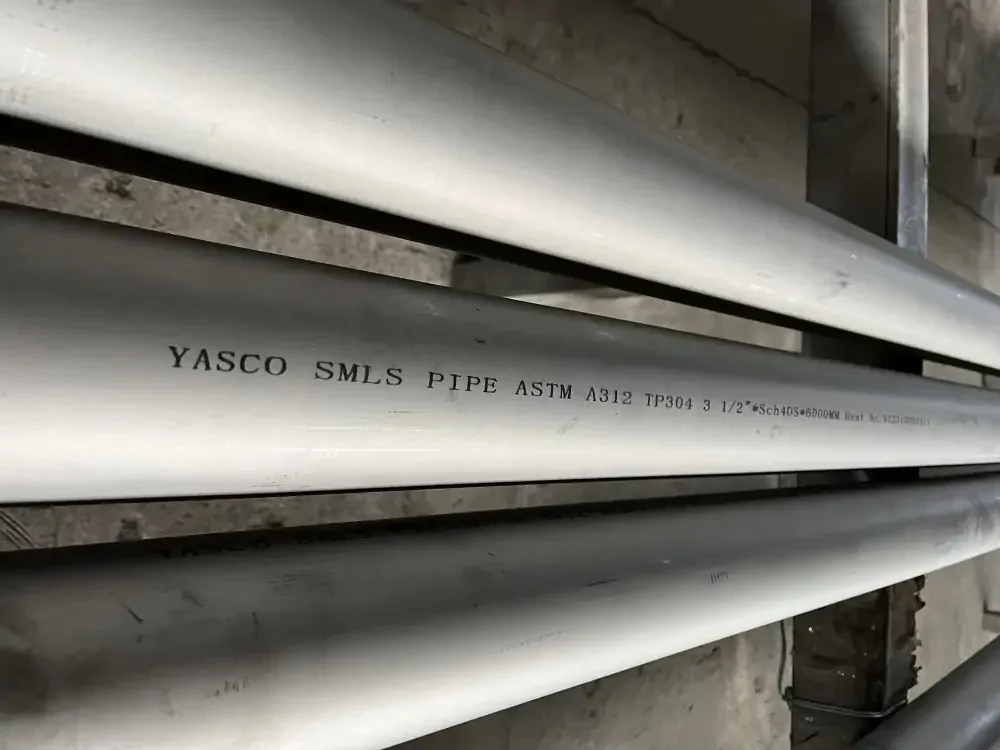
This chemical composition allows a dense, stable chromium oxide protective layer to form on the pipe surface—even in harsh conditions, this layer effectively resists corrosion from acidic, alkaline, and other corrosive substances.
The material is highly resistant to both high and low temperatures, ranging from -196℃ to 650℃. It retains strong mechanical properties without significant deformation or performance loss. This capability fully supports the transport needs of industrial production across different temperature conditions.
In terms of application scenarios, ASTM A312 Stainless Steel Industrial Pipes are highly versatile. In the chemical industry, they are commonly used to move various corrosive chemical raw materials, solvents, and reaction by-products (such as sulfuric acid and nitric acid), ensuring the chemical production process remains safe and smooth.
In the petroleum industry, they are widely applied—whether for transporting extracted crude oil or various oil-based fluids during refining.
Their ability to withstand high pressure makes them well-suited for the high-pressure environments involved in petroleum transport.
In the energy sector, they are used in nuclear and thermal power plants and similar facilities to convey thermal media such as steam and high-temperature water; their heat resistance ensures stable energy conversion and transport.
Beyond this, they also play a key role in industrial fields such as water treatment and shipbuilding, adapting seamlessly to the unique requirements of different industrial scenarios.
Compared with ordinary industrial pipes, ASTM A312 Stainless Steel Industrial Pipes have clear competitive edges.

First, their exceptional corrosion and heat resistance greatly prolong service life, reducing the frequency of production halts and maintenance due to pipe damage, thereby cutting down on enterprise operating costs.
Second, they offer excellent weldability: welded joints have high strength and reliable sealing, effectively preventing fluid leakage and enhancing the safety of industrial production.
Finally, they come in a wide range of specifications—pipes with varying diameters and wall thicknesses are available to meet the needs of various industrial applications.
This strong adaptability allows them to meet the installation and operational requirements of even complex industrial transport systems.