
Overview:
Stainless steel and aluminum tubes are widely used across engineering, construction, and manufacturing industries.
It is challenging for manufacturing professionals to make decisions when choosing materials, such as “stainless steel or aluminum tubing”. Each material has distinct characteristics that determine where it is best suited for different applications.
Understanding the mechanical properties of these two materials will help engineers with their technical projects.
Stainless steel tubes are a good choice for heavy-duty and corrosive environments. On the other hand, aluminum tubes perform best in situations where lightweight design and lower cost are more important.
The content below provides a sense of the key differences between the two materials. It aids in selecting the appropriate material for specific applications.
Material Overview of Stainless Steel Tubes:
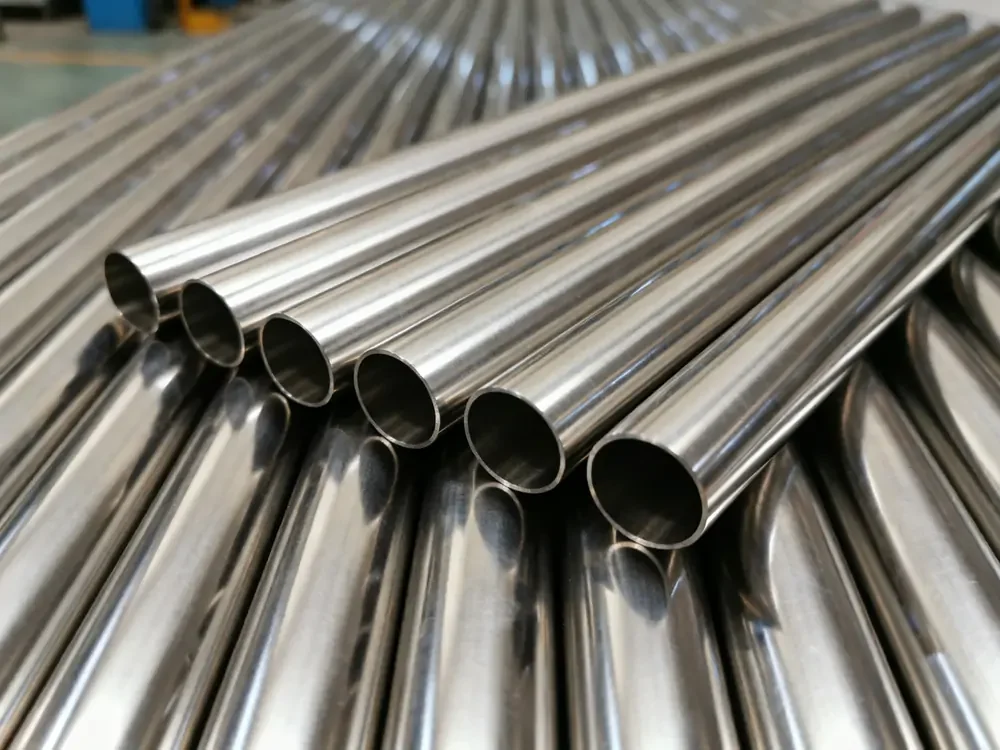
- Hollow, cylindrical stainless steel alloys are known as stainless steel tubes.
- The chromium content in steel alloys provides anti-corrosion and surface protection.
- Due to their long-term performance and toughness properties, these tubes are popular in construction projects.
- 304, 316, and 321 are the most common stainless steel grades.
Material Overview of Aluminum Tubes:
- Aluminum tubes are hollow structures. These are manufactured of lightweight aluminum alloys.
- Magnesium, silicon, or manganese are contained in these alloys.
- Aluminum tubes are gaining popularity in industries due to their low density and good corrosion resistance.
- 6061, 6063, and 2024 aluminum are the most common grades.
Mechanical Properties of Stainless Steel:
- One of the key characteristics of stainless steel is its tensile strength and hardness. Stainless steel is widely used to deal with high loads and pressures.
- Due to their resistance to deformation, stainless steel tubes are used in “structural applications”.
Mechanical Properties of Aluminum:
- Aluminum has lower tensile strength than stainless steel. But, aluminum is highly flexible due to its good strength-to-weight ratio.
- Aluminum performs well with lightweight structures. It is easier to deform aluminum tubes than stainless steel.
Stainless Steel Tubes Applications:
- Stainless steel tubes have extensive applications in oil and gas pipelines.
- Chemical processing plants and structural frameworks also use stainless steel tubes.
- Food and beverage equipment also uses these tubes due to their durability.
- Due to their high toughness, these tubes are an ideal choice for constructing sea and offshore buildings.
Aluminum Tubes Applications:
- Aluminum lightweight, so it is more suitable for architectural and furniture designs.
- In aerospace and automotive components, aluminum performs well.
- HVAC systems use these tubes widely.
- Aluminum tubes are suitable for improving heat exchanger efficiency.
Comparison of Stainless Steel and Aluminum Tubes:
- One of the major characteristics of stainless steel is its long-term durability. It requires minimal maintenance, so it has a long service life. Its performance is good in challenging environments, such as “high temperature and pressure”.
- Aluminum is also durable and performs well in moderate temperatures. But for heavy-load applications, it is not suitable. Under high stress, aluminum can be deformed easily.
- Cost comparison is a key consideration in choosing between aluminum and stainless steel. The expense of stainless steel is greater than that of aluminum. The major reason for the high cost of stainless steel is its demanding application requirements.
- Stainless steel tubes can be welded, but with a controlled procedure. Because these tubes are at risk of heat distortion, they require proper filler materials. Welding aluminum is quite easy and quick. But there is also a need for the right equipment to weld it.
Choosing Aluminum vs Stainless Steel:
The weight of both materials is a significant consideration for engineers or construction project planners.
- It is difficult for manufacturers to use stainless steel because of its high density and weight. But the weight of aluminum is lower than that of stainless steel, about 1/3.
- Hence, aluminum is ideal for lightweight structural applications. The applications of aluminum tubes include aerospace structures and portable equipment. Aluminum is also extensively used in automotive components.
Comparing thermal and electrical conductivity will also help to choose the right material for the required application.
- Stainless steel tubes do not have good electrical conduction properties. One limitation of stainless steel is its lower thermal conductivity. Stainless steel is suitable when heat transfer regulation is necessary.
- Alternatively, aluminum has a high thermal conductivity. Aluminum is a good electrical conductor. So, aluminum tubes are widely used in applications of heat exchangers.
Another significant factor to consider is corrosion resistance.
- Due to the chromium content, stainless steel has strong corrosion resistance. Because of a“protective oxide layer” on its surface, stainless steel is protected from rust. The popularity of grade 316 stainless steel is its wide use in marine and chemical environments.
- On the other hand, aluminum can be corroded in acidic conditions. There is a need for extra surface treatment, such as“anodizing or coating”. However, aluminum has a microscopic oxide layer. This oxide layer prevents it from corrosion. This renders it usable in numerous outdoor applications.
Knowing the differences between the two materials in terms of fabrication and machinability will also be helpful in industrial applications.
- Stainless steel is challenging to fabricate and machine. There is a need for particular tools and techniques to use them. There are some challenges to using stainless steel. It has a high processing cost. It has slower cutting speeds.
- In contrast, aluminum is easy to handle. Using aluminum tubes enables easy cutting, drilling, and welding. Aluminum has faster production cycles and lower manufacturing costs.
Conclusion:
Since Stainless steel material is harder than aluminum. Aluminum is less expensive than stainless steel. Stainless steel is less “electrically and thermally conductive” than aluminum.
So, choose stainless steel when high strength is required. The construction projects where resistance to carrion is essential. Choose stainless steel tubes when the application demands high stress or pressure. Long-term durability in industrial projects requires stainless-steel tubes.
Choose aluminum for lightweight structures. Engineers choose aluminum more often because it is easy to fabricate. Due to aluminum’s cost efficiency, it attracts more project planners.