
Introduction
The oil and gas, construction, food processing, power generation, and pharmaceutical industries require stainless steel pipes and tubes. Although the two may seem the same, the distinction between stainless steel pipe and tube lies in their size standards, wall thickness, manufacturing process, and the purpose for which they are used.
This knowledge of these differences enables engineers, contractors, and designers to select the appropriate product based on its performance, durability, and cost-effectiveness. Here in this article, you can learn the difference between stainless steel pipes and tubes.
What is Stainless Steel Pipe?
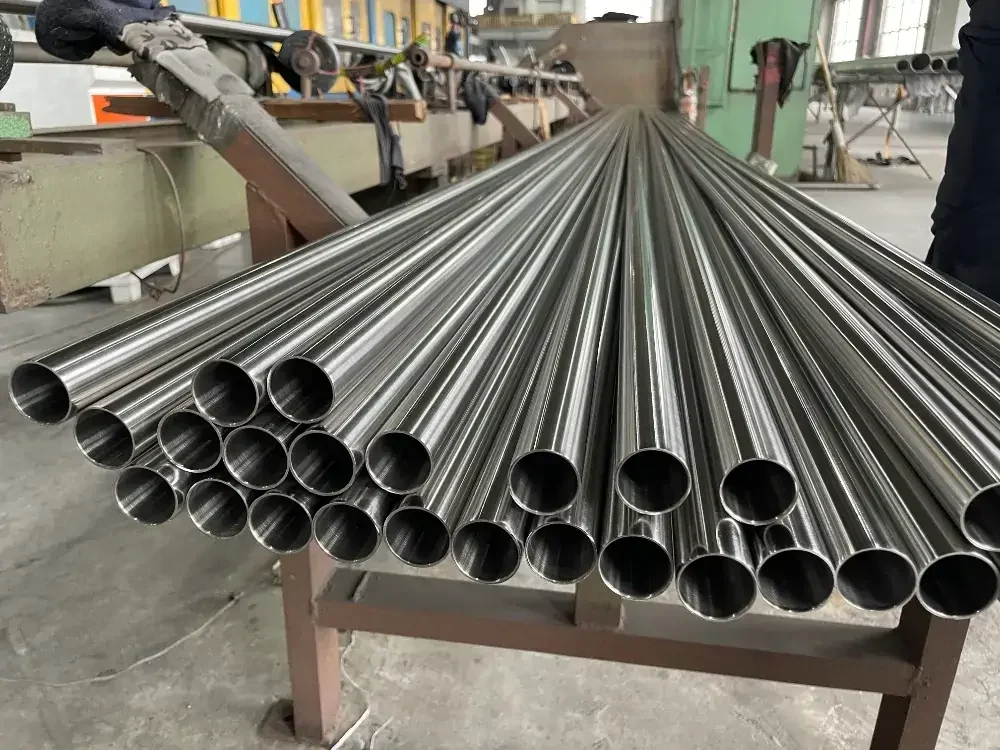
A stainless steel pipe is a hollow, round tube designed to transport pressurized fluids or gases. Pipe measurements are defined by Nominal Pipe Size (NPS) and Schedule (wall thickness), which determine the internal capacity and pressure rating.
- Shape: Always round
- Dimensions of importance: Inside (ID) and Outside (OD) diameter, and Wall (WT) thickness.
- Measurement Standard: Millimetres or inches.
- Use: Liquid, gas, and slurry transportation.
The formula which can be used to determine the inside diameter of a pipe is:
ID = OD − 2 × WT
What is Stainless Steel Tube?
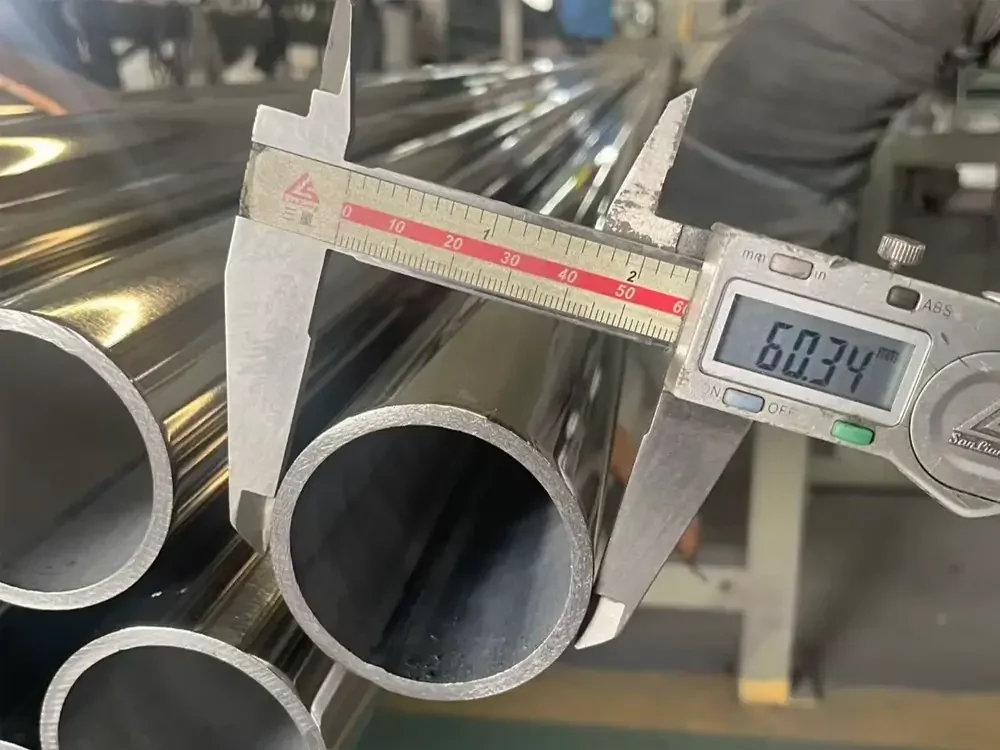
In contrast to a pipe, a stainless steel tube can be produced in various forms other than round, such as circular, square, rectangular, or oval. Tubes are used in cases where dimensional accuracy, mechanical durability, and aesthetic appeal are essential.
- Shapes: Round, square, rectangular, oval.
- Measures: Wall Thickness (WT) and Outer Diameter (OD).
- Key Characteristic: Produced in close tolerances.
- Application: Structural, mechanical, and precision applications.
An example is given of a 1-inch tube, wall thickness 0.065-inch, inside diameter:
1.000 − (2 × 0.065) = 0.870 inches.
This precision has enabled tubes to be used in various industries, including automotive, medical, instrumentation, and aerospace, among others, where even minor variations can have a significant impact on performance.
Differences Between Pipe and Tube
| Characteristics | Stainless pipes | Stainless tubes | ||
| Shape | Always | Round, square, and rectangle | ||
| Tolerance | Low-dimensional tolerance | High-dimensional tolerance | ||
| Surface finish | Rough | Mirror finish | ||
| Wall Thickness Range | 0.065″ – 1.25″ depending on Schedule | 0.020″ – 0.250″ depending on precision | ||
| Measurement System |
|
Outer Diameter (OD) & Wall Thickness (WT) | ||
| Strength | Can tolerate high internal pressure | These tubes can be used for structural strength and precision | ||
| Applications | Oil and gas companies use stainless steel pipes for transportation | These tubes are used for aesthetic and structural purposes | ||
| Cost | The process of production is simple, which makes them cost-effective | Stainless steel tubes are manufactured with high precision, making them costly |
Size and Dimensions
The primary distinction between stainless steel pipes and tubes lies in their designation by size.
- Pipes are identified by their Nominal Pipe Size (NPS) and Schedule Number, which determine their internal capacity and wall thickness.
- Tubes are, however, known by the precise outer diameter and wall thickness, which provides more accuracy.
| Nominal Pipe Size (NPS) | Actual OD (inches) | Schedule 40 Wall (inches) | Typical Tube (OD x WT) |
| ½″ | 0.840″ | 0.109″ | ½″ × 0.049″ |
| 1″ | 1.315″ | 0.133″ | 1″ × 0.065″ |
| 2″ | 2.375″ | 0.154″ | 2″ × 0.095″ |
| 3″ | 3.500″ | 0.216″ | 3″ × 0.120″ |
Manufacturing Process
Regarding the manufacturing process, both pipes and tubes may be smooth or welded, although their production accuracy is different:
Stainless steel pipes
- Seamless Pipes: These are made by piercing a solid billet to create a hollow cylinder, which is used to apply high pressure.
- Welded Pipes: Welded stainless steel in strips, and you can see the visible weld on the pipe.
Stainless steel tubes
- Seamless Tubes: Extrusion of billets, with no welds, and very tight dimensions.
- Precision Tubes: Develop several checks and are examined to meet requirements such as ASTM A269 and A213.
Wall Thickness
Pipes
- Schedule Numbers(SCH 5, SCH 40, SCH 80, SCH 160); the larger the number, the thicker the walls.
Tubes
- The thickness of the tube is measured in mm or inches (e.g., 1.5 mm, 2 mm, or 0.095 inches).
- Tubes are typically thinner-walled than pipes, but possess greater dimensional consistency.
Strength
The pipes are constructed to withstand internal pressure, and the tubes are used to maintain structural integrity.
- Tensile strength of pipes: 515-620 MPa(based on grade and schedule).
- Tube tensile strength: Precision-grade tubes have a tensile strength of 500-750 MPa (depending on the manufacturing standard).
Thus, the load-bearing structures take the tubes, whereas the pressurized systems use pipes.
Shape
- Pipes: These are always circular to allow the flow and to distribute pressure.
- Tubes come in various forms, including round, square, rectangular, or oval, to fit the mechanical and architectural requirements.
This diversity enables the application of tubes in automobile frames, furniture, and building rails.
Applications
The tensile strength and characteristics make stainless steel pipes and tubes suitable for use in many industries. Here is the summary table for the applications of both pipes and tubes in different sectors.
| Industry | Pipe | Tube |
| Oil and Gas | Transportation of crude oil, gas, and steam | Instrumentation and heat exchangers. |
| Construction | Plumbing and fire protection systems | Frames, handrails, and structural supports
|
| Automotive | Hydraulic systems and exhaust systems | Body structures and fuel lines |
| Food and beverage services | Transporting and sanitation of fluids | Processing and filling apparatus.
|
| Medical | Gas delivery lines | Instruments of surgery and diagnosis
|
Standards and Specifications
Different standards characterise the dimensional and material characteristics of stainless steel pipes and tubes:
Type of Product Standard Description
- Stainless Steel Pipes ASTM A312 / A358 that can be used in pressure systems as seamless and welded pipes.
- Stainless Steel Tubes (ASTM A269, A213) for heat exchangers and precision applications.
- Mechanical Tubing ASTM A554 in ornamental and mechanical uses.
- High-Temperature Tubing ASTM A213 boilers, heat exchangers, and condensers.
Costs
The prices of stainless steel pipes and tubes are determined by grade, size, and the process of their manufacture:
- Stainless Steel Pipes: 3-10$ per foot (depending on diameter and schedule)
- Stainless Steel tubes: 6-20$ per foot (depending on accuracy and finish)
Tubes are more costly because of reduced dimensional requirements and finishing, including mirror polishing or passivation.
Conclusion
To conclude, the distinction between pipes and tubes made of stainless steel lies in their purpose and dimensional standards. The pipes are used for moving fluids and gases, with a focus on the internal capacity of the flow. In contrast, the tubes are utilized in structural and precision applications, where tight fits and smooth finishes are required.
YASCO offers an extensive range of seamless, welded, and precision-engineered stainless steel products that ensure optimal performance for industrial, structural, and mechanical applications.