
Introduction
Various grades of stainless steel alloys are found in the market. Although they may appear to be the same, their composition of carbon, chromium, and other metallic elements differs. The added chromium quantity protects the alloy from corrosion and other damage.
Within this wide range of stainless steel alloys, the 300 series is the most important one. Among this series, 316 and 316L are marine-grade alloys. They are popular because they possess varying qualities of molybdenum and carbon content. Molybdenum protects the alloy from corrosion in seawater and chloride ion environments.
Both of these stainless steel alloys are applicable for a range of applications, including marine, shipbuilding, and other industrial uses. 316 and 316L can be used interchangeably. This article aims to differentiate between the two stainless steel variants — 316 and 316L — so that you can select the best.
What is Stainless Steel?
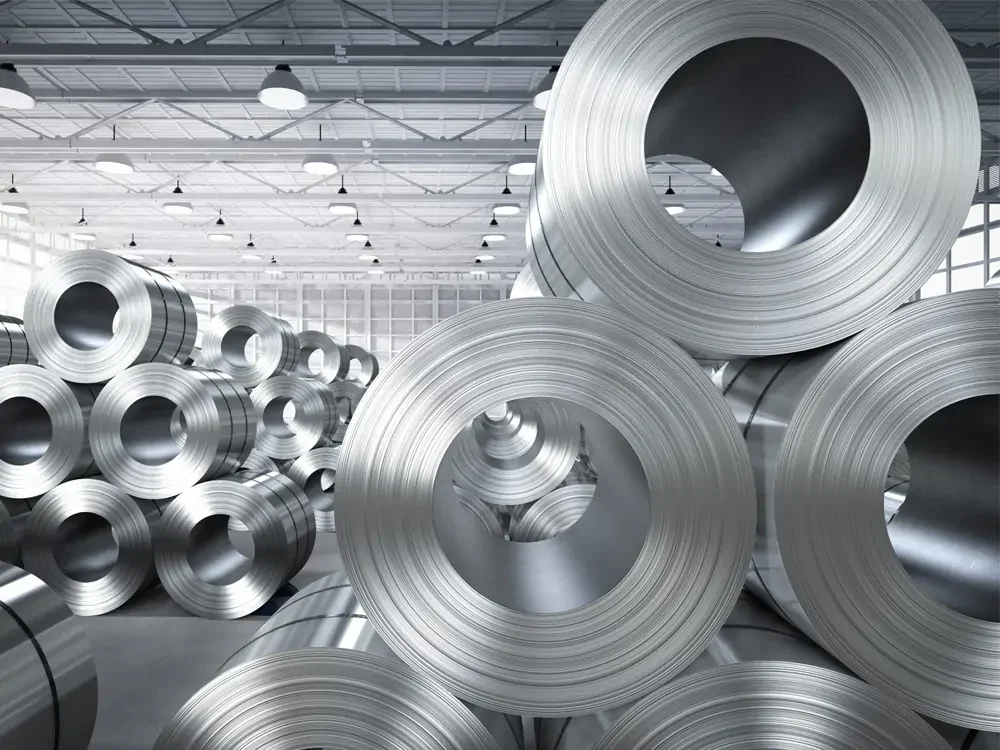
Stainless steel- a metal alloy that is a combination of iron and carbon. Lower quantities of other metallic elements may be added, which makes a wide variety of stainless steel grades. One of these is chromium, which is added at 10.5% in composition. It forms a self-repairing chromium oxide layer, which makes them highly corrosion-resistant. Additionally, it adds a glossy finish.
Stainless steel is a widely favored alloy known for its suitability for extended use. This is because of its distinctive properties. These include:
- Highly corrosion-resistant
- Heat resistant
- Ductile
- High gloss finish
- biologically inert
Due to their remarkable properties, they can be utilized in various applications. These include the marine, food, pharmaceutical, and other industries.
316 and 316L Stainless Steel: Definition and Composition
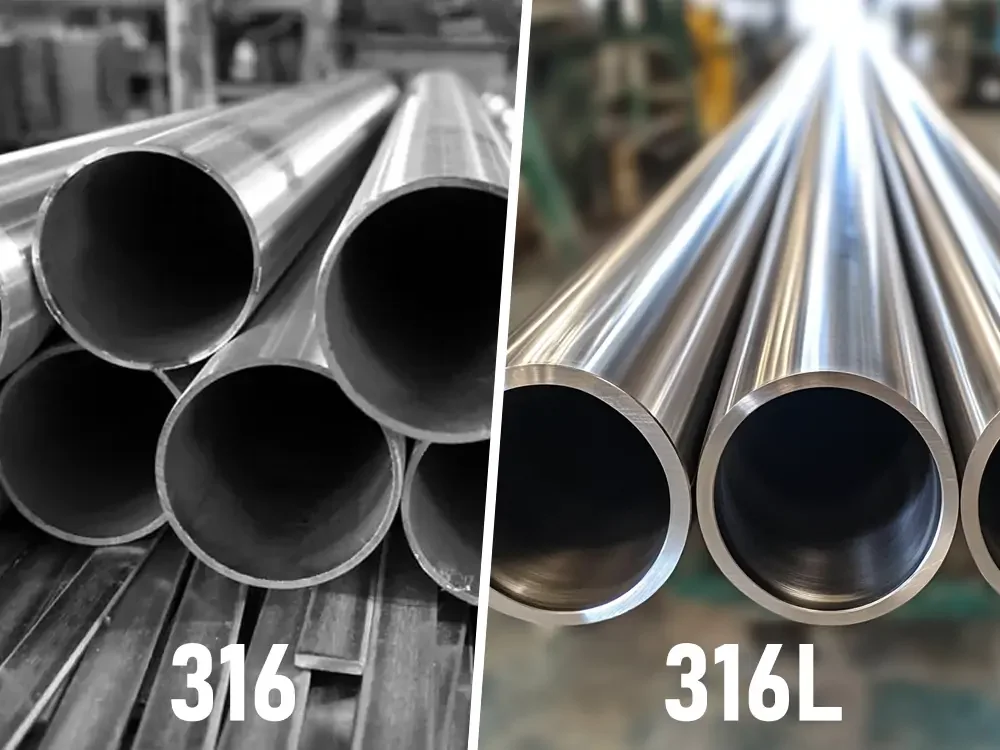
316 Stainless Steel:
It is a common type of austenitic stainless steel alloy. It is composed mainly of:
- 2-3% molybdenum
- 10-14% nickel
- 16-18% chromium
This composition offers excellent corrosion resistance. It is best suited for outdoor or underwater environments.
316L Stainless Steel:
316L stainless steel is distinguished by its notably low carbon content, which is less than 0.03%. During welding, this lower carbon level means a reduced chance of carbide precipitation formation. As a result, corrosion resistance is enhanced. 316L stainless steel serves in heavy-gauge and welded components.
316 vs 316L Stainless Steel
Composition of Carbon:
The key difference between the two stainless steel variants lies in the carbon content they contain. 316 stainless steel has a higher carbon composition when compared to 316L. During welding, the reduction of carbon leads to a reduced chance of carbide precipitate formation.
Weldability:
Lower carbon content composition is preferred for welding. So, 3l6 provides good weldability. It reduces weld decay, whereas 316 is more prone to corrosion after welding.
Corrosion:
When welded, 316L resists intergranular corrosion. Therefore, when compared, 316L exhibits better corrosion resistance than 316 stainless steel.
Mechanical Properties:
Both 316 and 316L possess similar strength and durability. However, the lower carbon content of 316L results in a slightly softer material. That’s why they are more ductile.
Cost and Availability:
Due to the slight variation in material composition, the cost and availability remain almost the same. However, sometimes you may come across 316L being sold at a high price. For long-term investment, it can potentially reduce maintenance costs.
Applications:
316 suits applications with extensive welding and corrosion resistance. So, it is used in medical implants, surgical instruments, and storage tanks. They are widely used in the marine and shipbuilding industries.
316L is widely used in applications such as water filtration and pharmaceutical reactors, and the food processing industry.
Choosing Between 316 and 316L
The choice between the two stainless steel variants ultimately depends on your work requirements. The application’s welding requirements and corrosion resistance needs serve as the two main factors.
- 316L has lower carbon content and is best suited for long-term investing.
- 316 is higher in carbon, which is why it corrodes more frequently than 316L.
Conclusion
After conducting a detailed analysis of the differences between 316 and 316L stainless steel, it was found that they differ in their carbon content composition. 316 offers high strength for less intensive welding applications. 316L stainless steel is better suited for welding and corrosion resistance. Assess your needs and then select the option that best suits your requirements.