
Introduction
There are various grades of steel pipes available, each with a specific level of strength. Schedule 40 is one of the most commonly used pipes for gas and water pipelines, as well as structural support.
Precisely, the schedule (SCH) specifies the pipe wall thickness. As the schedule (number) increases, the pipe’s wall thickness also increases. The term “schedule 40” is a standardized term assigned by the American National Standards Institute (ANSI).
In this article, we will discuss everything about Schedule 40, including its meaning, dimensions, pipe grades, and applications. We’ll also compare Schedule 40 pipe with other pipe schedules to better understand them. So, read till the end.
What does ‘Schedule’ mean in piping?
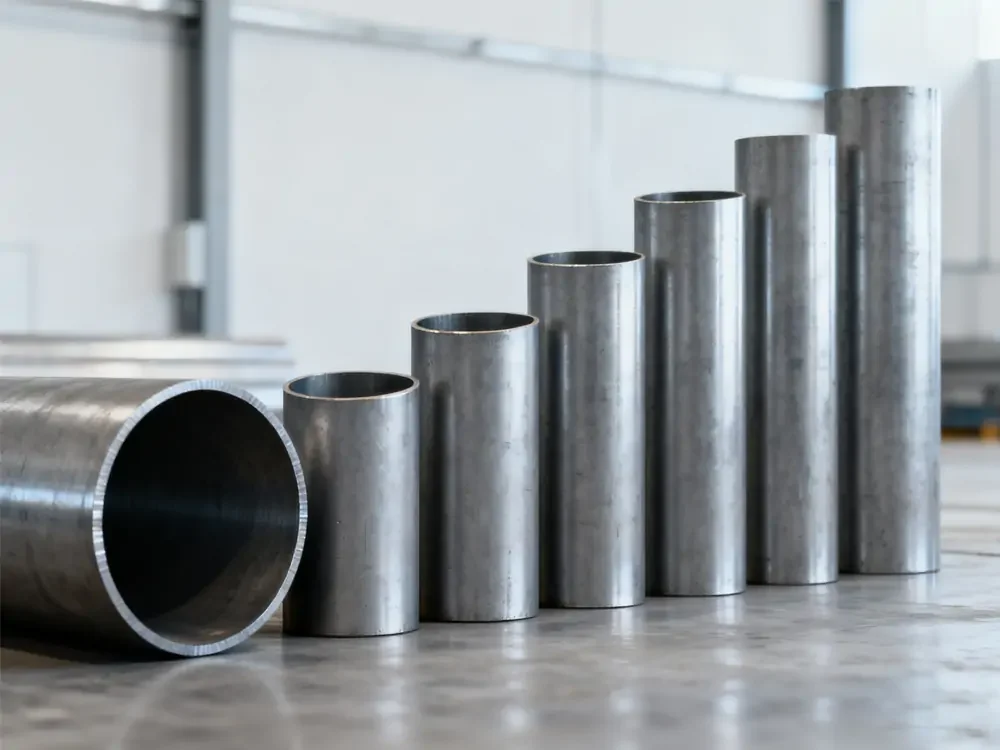
First of all, it’s better to understand the term “Schedule” or “SCH”. As mentioned earlier, it is a standardized term assigned by the American National Standards Institute (ANSI). It shows the inner thickness of the given nominal pipe size. The ANSI schedule pipe system ensures consistency across various pipes manufactured by different companies. This way, contractors and engineers will have a clear standard to help them select the right pipe for the job.
The wall thickness affects the pipe’s ability to withstand pressure, and it is a crucial feature. There are various pipe schedule numbers available in the market. Commonly used are 10, 20, 40, 80, and more. These SCH number pipes have a perfect balance of strength, making them ideal for industrial applications.
What does “Schedule 40” mean?
When the wall thickness of a is defined, you may measure the inner and outer diameters. So, the schedule 40 indicates the inner wall thickness or diameter. In contrast, the outer diameter remains unchanged across different schedule numbers.
Schedule 40, or SCH 40, is a standardized designation for the wall thickness of steel pipes. When discussing the number “40” in this context, it is dimensionless. This means it does discuss the pipe diameter (40 mm) or its thickness. Instead, it’s just a number designated by the American National Standards Institute (ANSI) within the pipe schedule numbering system. Therefore, as this schedule number increases, it indicates an increase in wall thickness.
Further diving in, SCH 40 pipes lie between SCH 10 and SCH 80, offering a balance of strength and reliability that enables them to withstand optimal pressure conditions.
Schedule 40 Pipe Dimensions
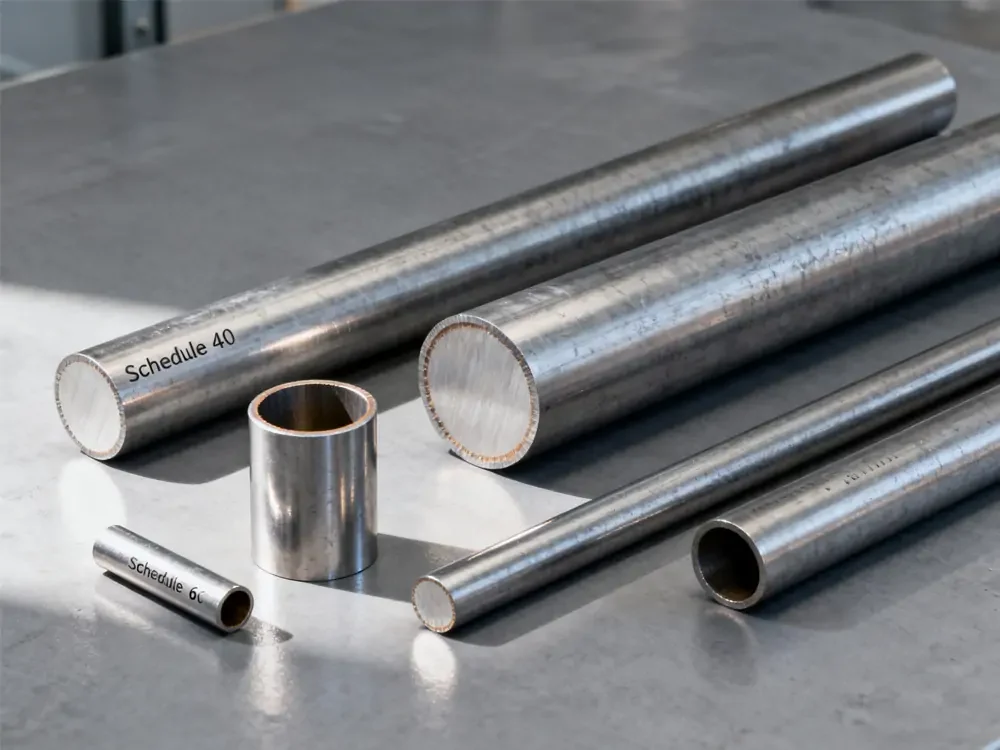
Schedule 40 pipe dimensions are based on ANSI standards that control wall thickness for different pipe sizes. You can measure the pipe thickness in two ways. The outer diameter and the wall thickness. The outer diameter remains the same across pipe sizes, but the wall thickness increases as the schedule number increases.
Take a 1-inch Schedule 40 pipe, for example. It has an outer diameter of 1.315 inches and walls that are 0.133 inches thick. The inside diameter measures 1.049 inches, and it weighs about 1.68 pounds per foot. Larger pipes have thicker walls to handle more pressure.
A 6-inch pipe has an outer diameter of 6.625 inches and 0.280-inch walls. It weighs around 18.99 pounds per foot.
These standardized measurements enable engineers to select accordingly for their projects. The wall thickness ranges from 0.068 inches for small 1/8-inch pipes up to much thicker walls for larger sizes.
Schedule 40 Pipe Grades
SCH 40 mainly uses mild carbon steel in its manufacturing. It contains approximately 0.2% to 0.25% carbon, making it mostly a ferrous alloy.
Therefore, these pipes are galvanized to improve their grade. Consequently, the pipe gains strength and better pressure-handling capacity. Manufacturers apply zinc to the pipe’s surface, making it more resistant to rust damage. But there is no need for this procedure for Schedule 40 pipes, as they are available in stainless steel, which engineers might prefer.
A53 steel pipe is the most common schedule 40 pipe. Not limited to this, you can find other grades in this schedule, too.
Schedule 40 Steel Pipe Weight
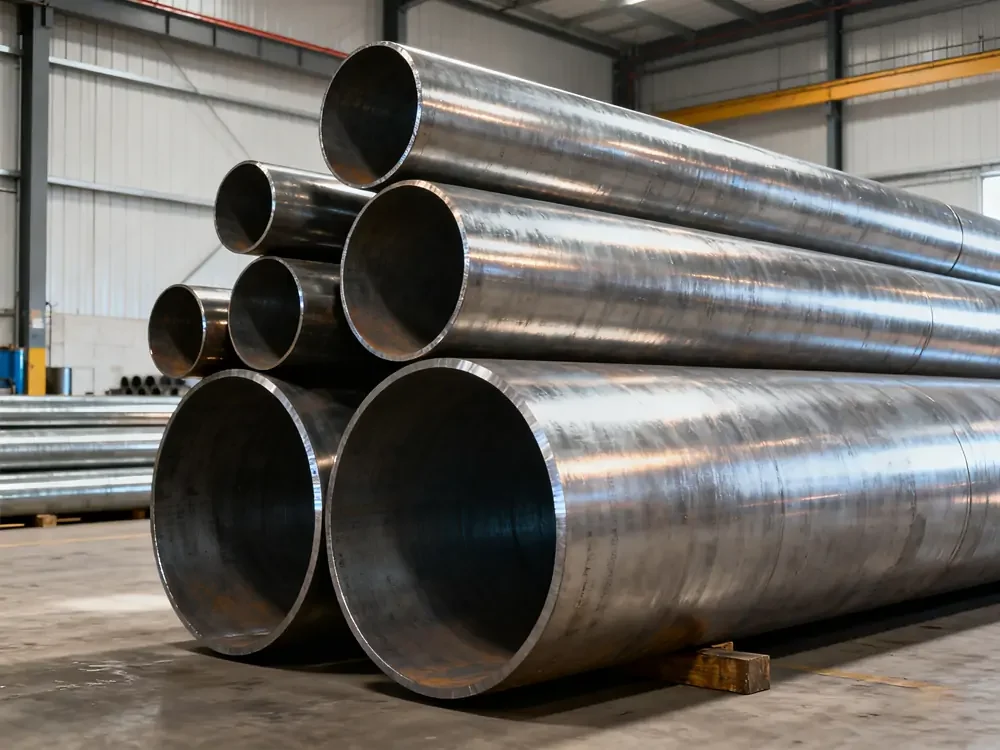
The weight of a Schedule 40 steel pipe depends on its size, wall thickness, and steel type. In short, many factors add to the weight of the pipe.
A 1-inch Schedule 40 pipe weighs about 1.68 pounds per foot. A 6-inch version weighs roughly 18.99 pounds per foot. The weight increases for larger sizes. As a result, they excel in demanding construction and industrial environments.
Applications of Schedule 40 Steel Pipe
Schedule 40 steel pipe is suitable for various mid to industrial-grade applications. These include:
- Water distribution, gas supply, and oil lines.
- Residential and industrial plumbing systems
- process piping in factories and chemical transport,
- Fire sprinkler systems
- Construction for frameworks or fencing
Schedule 40 Steel Pipe Price
The price of Schedule 40 steel pipe depends on size, material grade, and market fluctuations. Smaller diameters are less costly, while larger pipes and specialty alloys command higher prices. Bulk orders often attract discounts, but prices may vary based on manufacturing quality and sourcing region. For most common sizes and materials, Schedule 40 pipes are competitively priced and strike a good balance between cost and performance.
Differences between Schedule 40 and Schedule 80
Although both pipes share many common points, people sometimes confuse the two.
While Schedule 40 pipe offers a balanced combination of strength, it possesses lower wall thickness than Schedule 80 pipe. The primary difference is the variation in wall thickness between the two.
Different wall thicknesses, consequently, mean differences in the ability to withstand pressure. Here, SCH 80 has a thicker wall that withstands pressure well, making it the preferred choice for industrial and commercial applications. Click here to see more comparisons between the two.
Differences between Schedule 40 and Schedule 10
Schedule 10 pipes have thinner walls than Schedule 40 pipes. Their reduced thickness means they weigh less and cost less, but they’re only built for low-pressure applications. Schedule 40 pipes have thicker walls that can manage higher pressures and provide greater strength.
Both share the same outer diameter, but Schedule 40 weighs more and costs more due to its added strength.
Conclusion
To conclude, you can easily differentiate between Schedule 40 and other Schedule pipes. Because its inner wall thickness is balanced — neither too thick, as with SCH 80, nor too thin, as with SCH 10 — it is one of the most popular options for various medium-grade applications. But if you want, manufacturers can galvanize these steel pipes to make them corrosion-resistant. If not necessary, you can opt for other schedule 40 pipe options, such as stainless steel. When discussing its weight and price, they may fluctuate depending on various factors. However, remember that a reliable manufacturer can offer you a good deal on bulk purchases.