
Introduction
Many industries use ASTM A213 and ASTM A269, among the most widely used standards for defining quality parameters in the production of seamless and welded stainless steel tubing. Manufacturers can make a suitable choice by considering these specifications.
The American Society for Testing and Materials (ASTM) has set these standards for stainless steel tubing. People can use both ASTM A213 and ASTM A269 in their industries where corrosion resistance and strength are required.
In this article, you will learn about the differences between ASTM A213 and ASTM A269. That will help you select the right steel tubing for your needs.
ASTM A213 Standard Overview
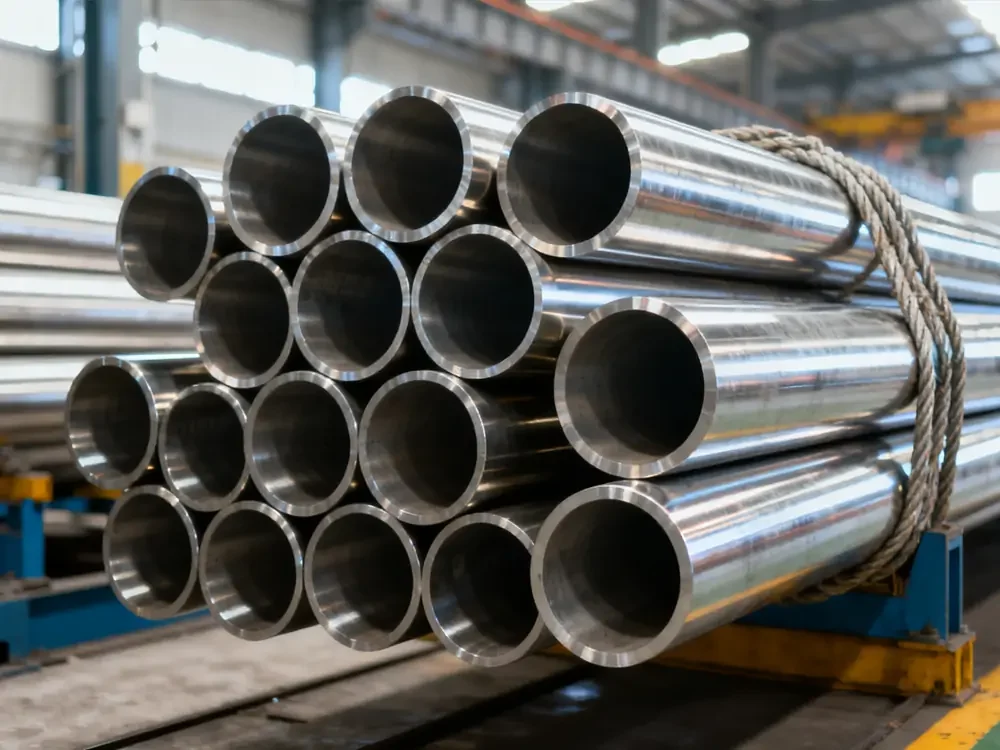
ASTM A213 stainless steel tubing is seamless, made of either ferritic or austenitic stainless steel, and intended for high-temperature, high-pressure service.
Manufacturers use the seamless or electric fusion-welded (EFW) method to produce these types of tubing. It is followed by cold drawing and intermediate annealing to achieve a homogeneous microstructure and strength. Final sizing is followed by dead-soft annealing to provide ductility, and the tubing can easily be bent and flared into place during installation.
Industries require ASTM A213 tubing to be engineered with a minimum wall thickness tolerance. It is suitable for very challenging thermal conditions, such as those in power generation, petrochemical, and refinery systems. Common grades are 304, 304L, 316, 316L, 321, 347, and other heat-resistant stainless steels.
ASTM A269 Standard Overview
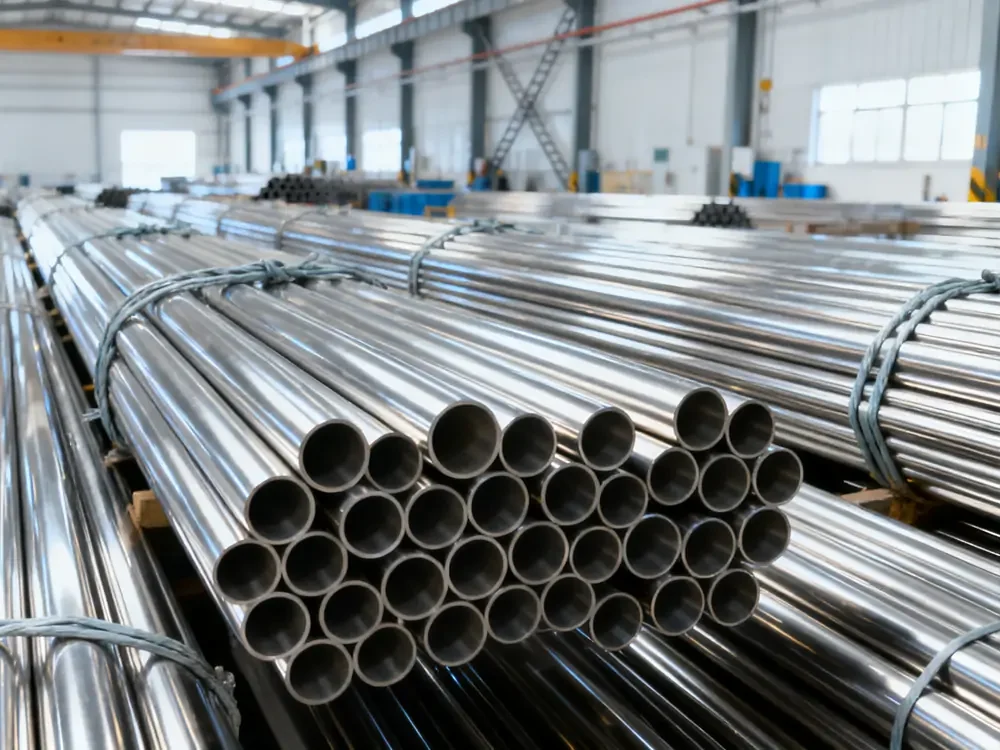
Engineers use the ASTM A269 standard for stainless steel tubing, whether seamless or welded. These pipes have an average wall thickness, providing additional flexibility for general-purpose and low to high-temperature applications.
Industries that use ASTM A269 tubes focus on corrosion resistance, oxidation resistance, and cleanliness. These features make it applicable in chemical processing, food and beverage production, and pharmaceuticals. Controlled heat treatment is applied to the tubing to restore corrosion resistance after cold working, and it is frequently bright annealed or pickled, as per the intended surface finish.
Differences between ASTM A213 and ASTM A269
| Features | ASTM A213 | ASTM A269 |
| Type | Seamless ferritic and austenitic alloy-steel tubes | Seamless, welded, and heavily cold-worked austenitic stainless steel tubes |
| Wall thickness | Minimum wall thickness | Average wall thickness |
| Grades | 304, 304L, 316, 316L, 321, 347, 310S, etc. | 304, 304L, 316, 316L, 321, 347, 310S, etc. |
| Manufacturing process | The EFW process is used for manufacturing seamless tubing | Seamless welded and heavily cold-worked |
| Tolerance | ±0.10 to ±0.38 mm depending on diameter | ±0.13 to ±0.76 mm depending on diameter |
| Surface | Dull | Shiny and bright |
| Application | These pipes can be used in industries that require high-temperature, high-pressure tolerance. | Mostly, the instrumentation, pharma, and food industries use these standardized pipes. |
· Manufacturing Process
The manufacturing process for both standard pipes includes common steps, such as cold drawing and annealing. Manufacturers use an additional layer of thermal and dimensional control to ensure durability and stability in ASTM A213 under extended thermal exposure.
In contrast, ASTM A269 is made by heavily cold-worked welded tubing, giving manufacturers some scope to produce tubing with an internally smoothed surface, a preferred feature for fluid transport.
Both types of tubing are plugged after final annealing and cleaning. These measures are in place to prevent contamination of the tubing during transport.
· Wall Thickness Tolerance
Manufacturers can determine the wall thickness tolerance from the tubing’s outer diameter. The proper information states that ASTM A213 has a minimum tolerance of ±20% to ±22% of the wall thickness. Whereas ASTM A269 has a tolerance of –10% -15 %, depending on the tube’s size, as confirmed by reputable industry sources.
· Applicable Materials
The wide applications of both types of tubing, ASTM A213 and ASTM A269, are due to the use of 304, 304L, 316, 316L, 321, and 347 materials in their manufacture.
The ASTM A21 specification uses ferritic grades and is occasionally applied to stainless alloy steels, especially where a high-temperature environment is required.
· Applications
The high strength, corrosion, and heat resistance of the ASTM A213 tubing are used in boilers, heat exchangers, and power systems.
Industries can use ASTM A269 for instrumentation, hydraulic, and process lines that require high corrosion resistance and a clean interior finish.
Testing Requirements
The two standards have similarities in the rigorous testing that is done to make sure the product is reliable:
- Hydrostatic Test: Pressure of between 7 and 31 MPa, depending on the diameter.
- Eddy Current Test: Test performed according to ASTM E426 so that defects can be detected.
- Intergranular Corrosion Test: An Intergranular test is done according to the ASTM A262 Practice E.
- Mechanical Tests: To check ductility and strength, tensile, flaring, flange, and hardness tests are included.
These tests verify the performance of tubing that meets or exceeds the desired level in an industrial environment.
Buy High-Quality Stainless Steel Pipe from YASCO
- Hunan Yasco Engineering Materials Co., Ltd is a reliable supplier of stainless steel pipes available in ASTM A213, A269, A312, and A249. It has been in business for 22 years.
- YASCO provides high accuracy, long life, and anti-corrosion properties across all pipes, with high-quality CNC machinery and ISO-certified quality control standards.
- Customers enjoy custom fabrication services, including welding, bending, and polishing.
- The company exports its products to 35+ countries.
Contact YASCO now at aurora@hnyasco.com or visit the website to get a quote or discuss your project requirements.