
Some industries have strict requirements for hygiene and quality standards compliance. Food, pharmaceutical, beverage, and many other industries require high-end stainless steel tubing. One of the best options is stainless steel sanitary tubing, which offers high hygiene and easier cleaning.
Today, we will understand stainless steel sanitary tubing, the standards it follows, and its critical applications.
What Is Stainless Steel Sanitary Tubing?
Stainless steel sanitary tubing is used for hygiene purposes in the food, pharmaceutical, and many other industries. Different steel grades, quality, and surface finishes make cleaning easier. They help prevent contamination and ensure good hygiene in any environment.
Four key standards apply to the steel used in sanitary tubing.
- 304 스테인리스 스틸
- 304L 스테인리스 스틸
- 316 스테인리스 스틸
- 316L 스테인리스 스틸
Each grade has different applications. For example, 316L is ideal for biotechnology and pharmaceutical applications.
Stainless Steel Sanitary Tubing Standards
When choosing stainless steel tubing, you should understand which standards it follows. The most common standards include:
ASTM A270
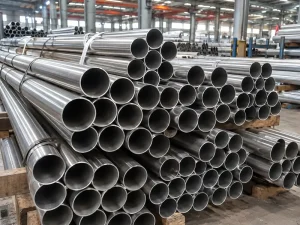
ASTM A270 is one of the most commonly used and widely recognized standards for steel products. This standard covers seamless, welded, and heavily cold-worked stainless steel sanitary tubing. It is used in various applications, including dairy, food, and hygienic services. It has strict rules for material composition, manufacturing methods, testing procedures, and surface finishes.
This standard addresses the following areas:
- Material grades
- 기계적 특성
- Surface finish options
- Weld quality requirements
- Dimensional tolerances
- Testing procedures
This standard specifies different grades of stainless steel tubing.
ASME BPE
ASME BPE is another standard commonly used in biotechnology and pharmaceutical applications. This standard aims to ensure strict hygiene, high-quality stainless steel tubing, and a smooth surface finish for stainless products.
It follows:
- Surface roughness requirements
- Material traceability
- Weld inspection
- Documentation
- 세척 용이성
- Sterility
3-A Sanitary Standards
If you work with sanitary tubing in food processing or other fields, 3-A sanitary standards matter. They often provide hygiene-related specifications.
Most suppliers offer both the ASTM A370 and 3-A Standards for sanitary tubing.
ISO 표준
ISO is an international standard that follows global rules and regulations. It provides standards for quality, hygiene, and material traceability.
Stainless Steel Sanitary Tubing Surface Finishes
Stainless steel tubing finishes can affect the overall appearance, performance, and hygiene. There are four fundamental types of surface finishes.
밀 마감
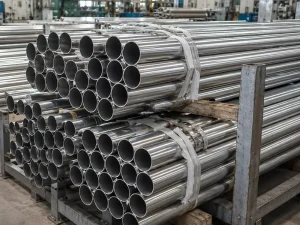
Mill finish is the basic and most affordable finish. It costs less, requires minimal polishing, and is ideal for general industrial applications.
Mechanically Polished Finish
Mechanically polished finishes use abrasives to smooth the tubing. This creates a clean look. They are easier to handle, maintain, or clean.
Multiple types of mechanically polished finishes are available.
Electropolished Finish
Electropolished finish is one of the most important finishes, achieved through the electroplating process.
This method is effective for industrial applications and offers the following benefits.
- Extremely smooth surface
- Enhanced corrosion resistance
- Improved cleanability
- Reduced bacterial attachment
- Better passivation
Passivated Surface
A passivation surface protects against corrosion and has a chromium oxide layer. It is performed after fabrication and welding.
Manufacturing Methods of Stainless Steel Sanitary Tubing
Three main methods are used to manufacture high-end sanitary tubing.
Seamless Tubing
Seamless tubing is also popular because it lacks welded seams. They are manufactured under strict quality conditions and may have different features:
- Uniform structure because of the seamless connection between the tubes
- High-pressure capability
- 뛰어난 내식성
Welded Tubing
You can create welded tubing by rolling stainless steel tubes and welding them at various points. This process is common. It creates durable stainless steel tubes for industries.
- Lower cost, as it involves a simple welding process.
- It offers consistent dimensions because welding points are measured accurately.
- Good availability because welding tools are easily accessible.
Cold-Worked Welded Tubing
After preparing the welded tubing, it may undergo further processing and cold working. The goal is to enhance the tubing’s mechanical features and quality for hygiene.
The benefits of Cold-Worked Welded Tubing include:
- Cold working provides improved strength.
- Enhanced weld integrity
- Better dimensional accuracy due to high strength and resistance to deformation.
Stainless Steel Sanitary Tubing Applications
Stainless steel sanitary tubing is critical for the following applications.
Food Processing Industry
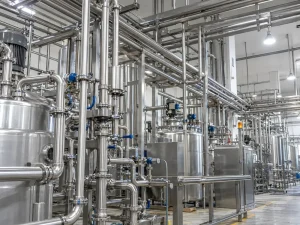
Food products require contamination-free processing. Stainless Steel Sanitary Tubing is important for milk processing, sauce production, edible oil systems, meat processing, and bakery operations.
Dairy Industry
The dairy sector is also one of the largest systems using stainless steel tubing. It helps in milk transfer lines, yogurt production, cheese manufacturing, cream processing, and CIP systems.
Beverage Industry
Beverage industries can’t afford to have an unhygienic system. Sanitary tubing also helps prepare different beverages under complete hygiene.
Pharmaceutical Manufacturing
Pharmaceutical drug companies produce drugs under structured hygienic conditions. Mixing different chemicals or particles can affect drug efficacy. Therefore, stainless steel tubing helps with drug manufacturing, hygienic control, and injection water systems.
Biotechnology Industry
The biotechnology industry requires critical cleanliness and hygienic production. Thanks to stainless steel sanitary tubing. It supports fermentation systems, cell culture processes, bioreactors, and sterile transfer lines.
Cosmetics and Personal Care Manufacturing
Cosmetics and personal care brands also use sanitary tubing for several purposes. For example, they use it for cream production, lotion manufacturing, shampoo processing, and liquid soap systems.
결론
If you are installing sanitary tubing in your production process or hygiene areas, stainless steel is a smart choice. Standards such as ASTM A270 and ASME BPE require proper production, quality, and reliability in stainless steel products. So you can meet your cleaning and sanitary goals with standard products.
For reliable, standard stainless steel tubing, contact trusted suppliers. One of those famous suppliers is Hnyasco!! We manufacture stainless steel pipes, fittings, and products. Explore our wide range of products right away!